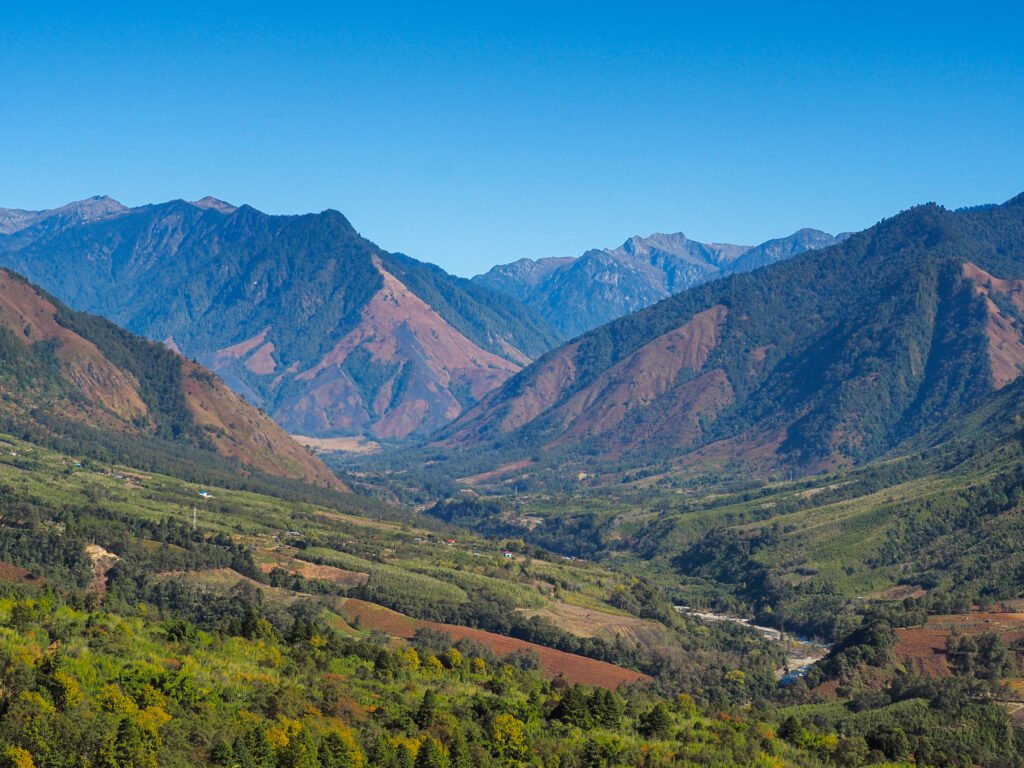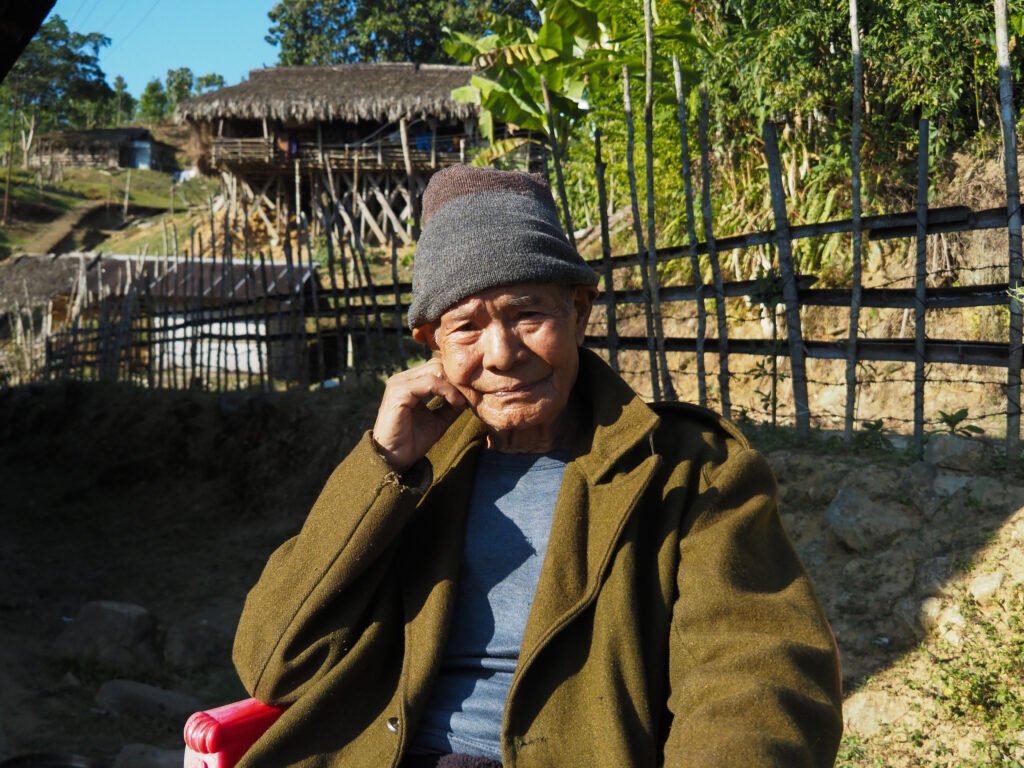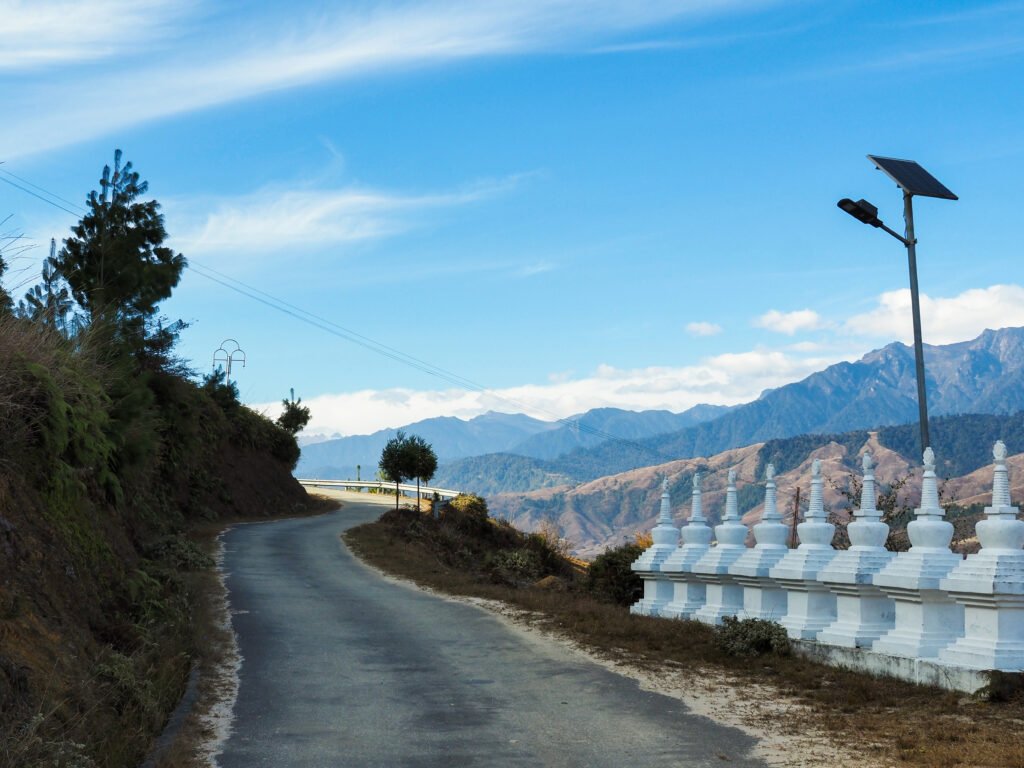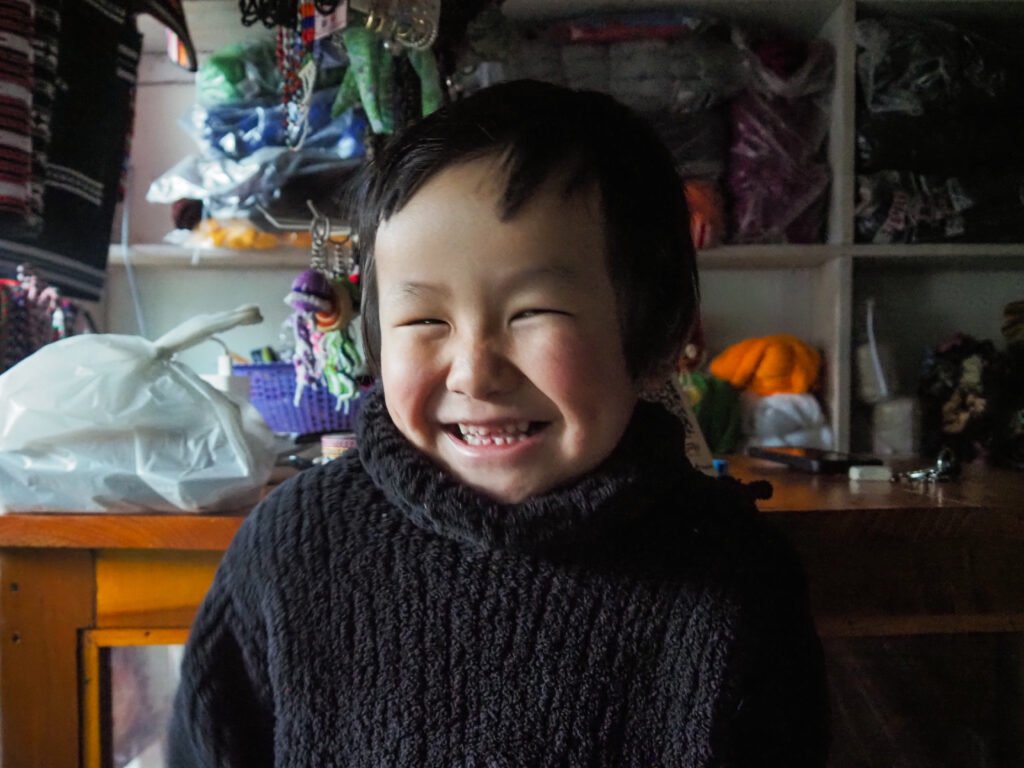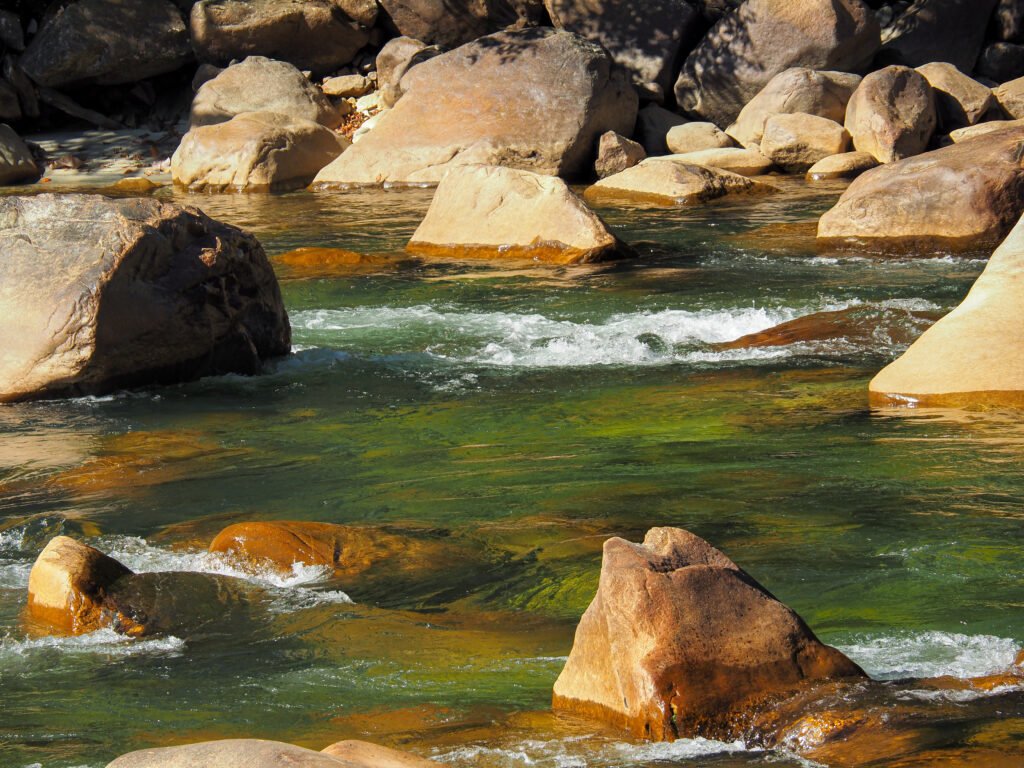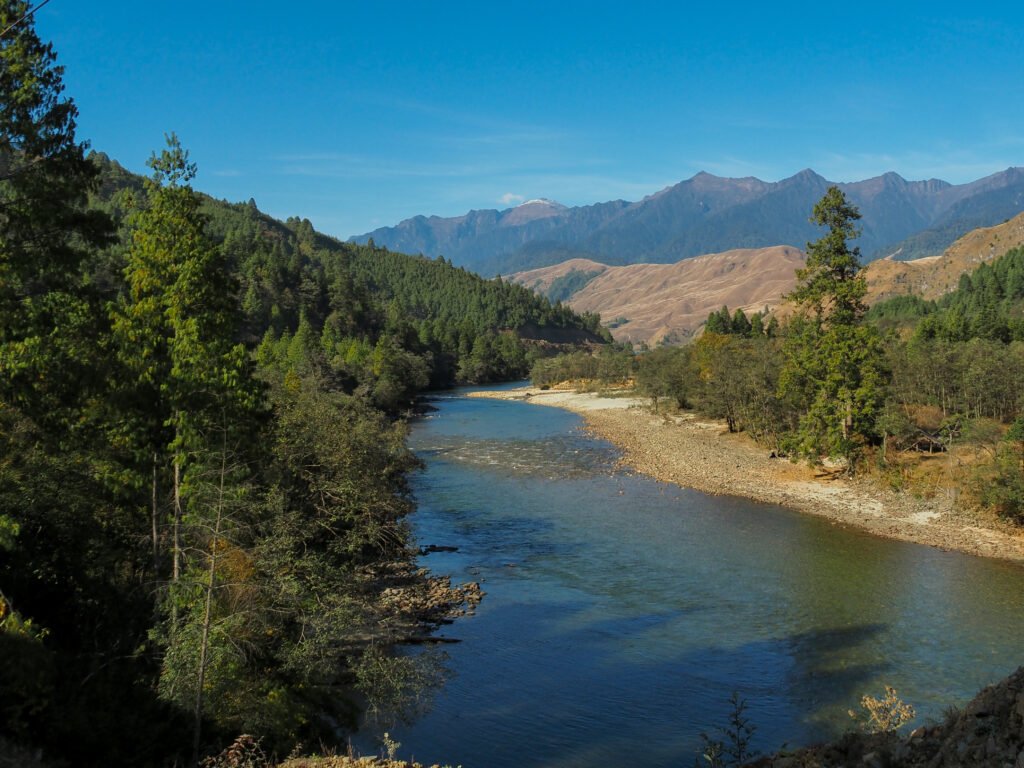
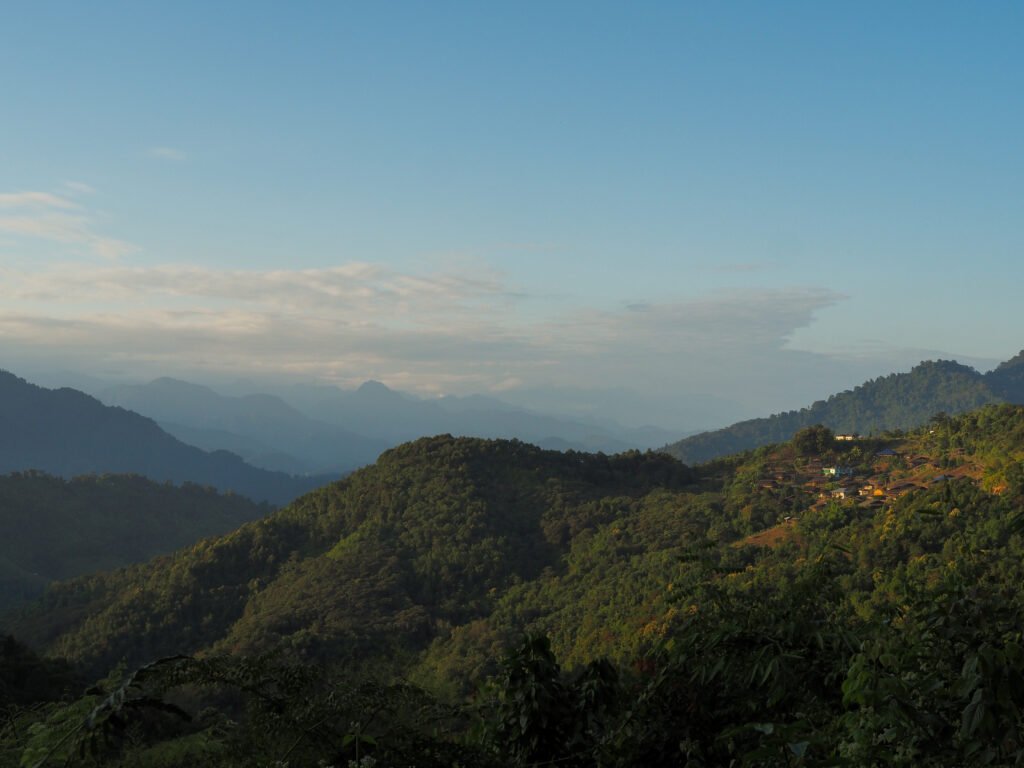
Located in the far north-eastern corner of India, Arunachal Pradesh is probably the most remote region of the whole country.
It is the first Indian state to see the sunrise and to that it owes its name Arunachal Pradesh “the region that carries the sun”. It is the least densely populated region of India, with only 17 inhabitants per square kilometre and over 80% forest cover. The vegetation is dense and surprisingly jungly, it hosts exceptionally abundant biodiversity and it is home to rare wild animals like tigers, leopards and red pandas.
Most of the modern infrastructure is still under construction and was non-existent until a few decades back. Narrow, bumpy dirt roads cutting across the ridges of high mountains climb up steep valleys and lead to remote villages where electricity, water and phone connection are not to be taken for granted.
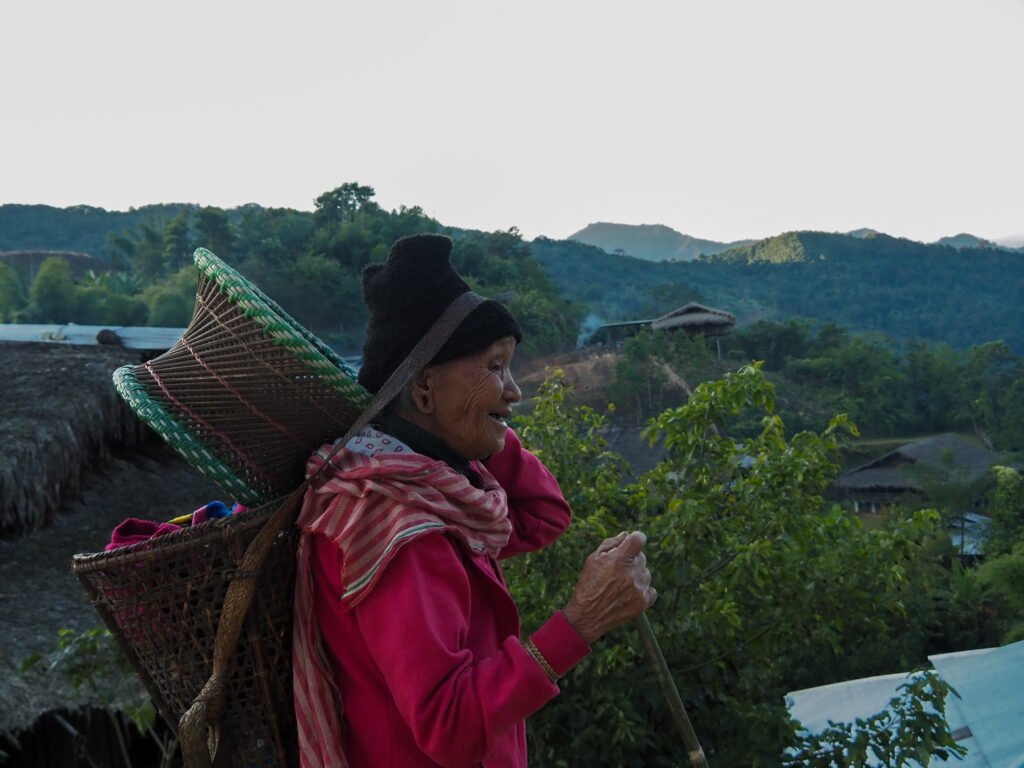
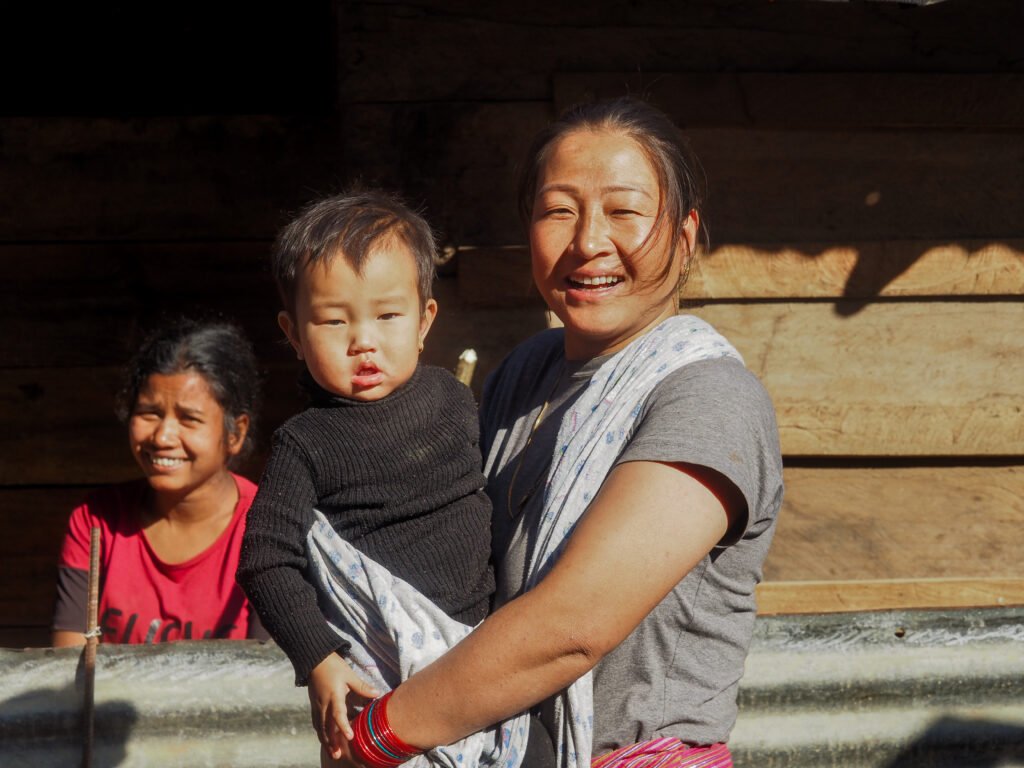
Arunachal Pradesh borders Bhutan, Tibet and Myanmar, and because of its strategic position it has been contended over the centuries between different countries. Travelling in the region doesn’t feel like exploring India, but an untouched state of its own, where people’s looks are very diversified and much more resembling that of Mongolia than the Indian one. It is in fact believed that the inhabitants of Arunachal Pradesh were originally Mongolians migrated all the way to this area.
Also thanks to its isolation and remoteness, the region still retains a precious and strong tribal culture, with 26 main tribes and 106 minor tribes, each one with its own language, look and traditions. Travelling from one village to the other meant learning a completely new way of living, of communicating and of believing.
Ziro Valley
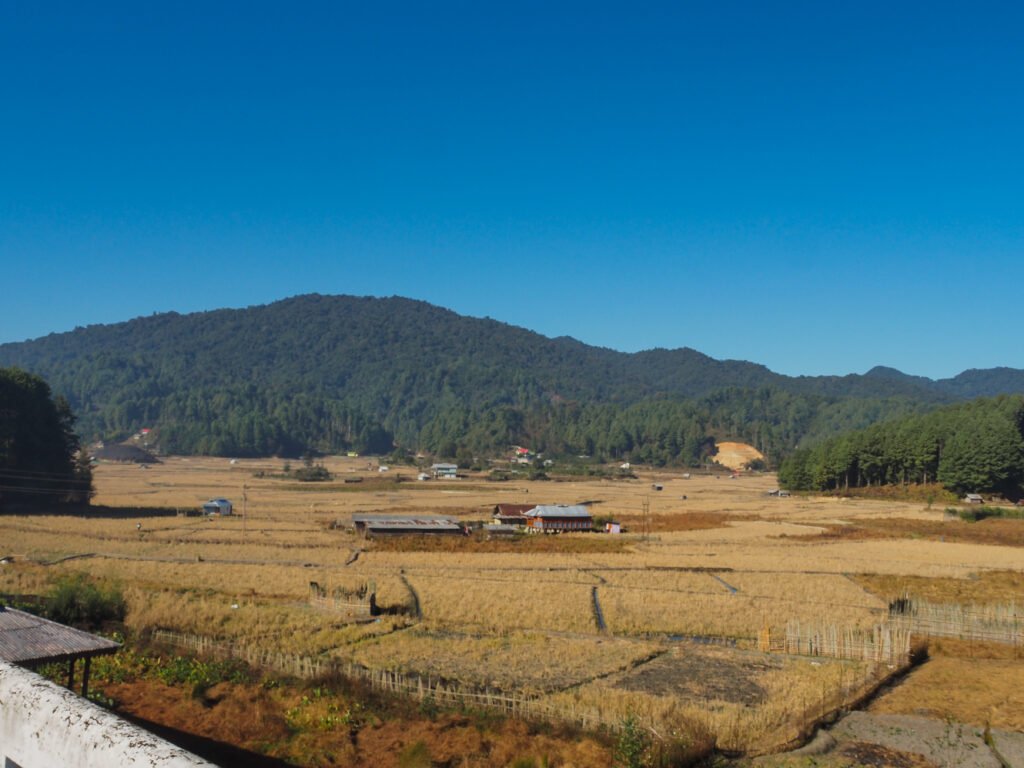
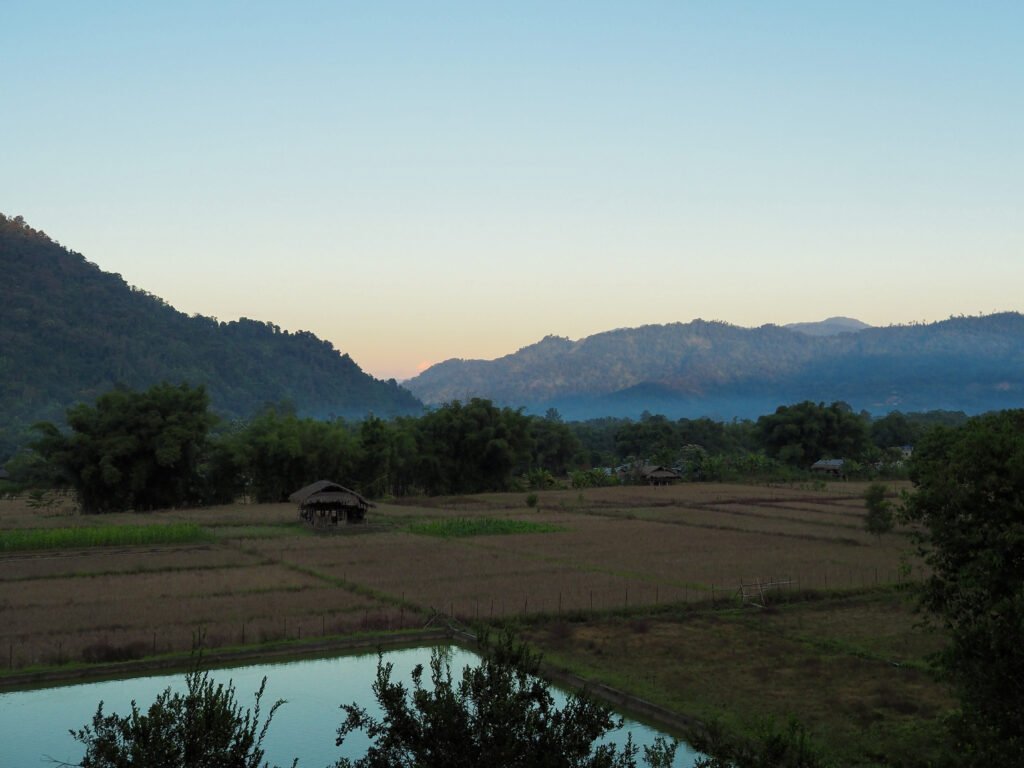
The first stop of our discovery of Arunachal Pradesh is Ziro, a broad valley painted beige by the millet fields. At this time of the year, the fields are dry and farmers gather the hay into small teepee-shaped piles to feed their livestock.
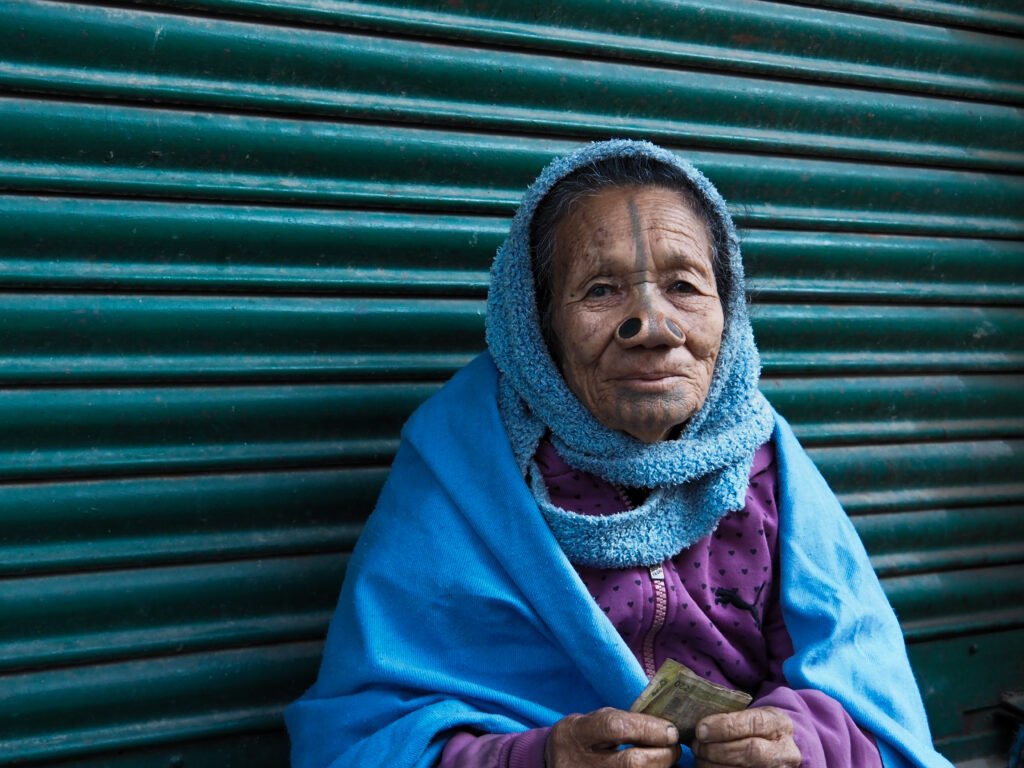
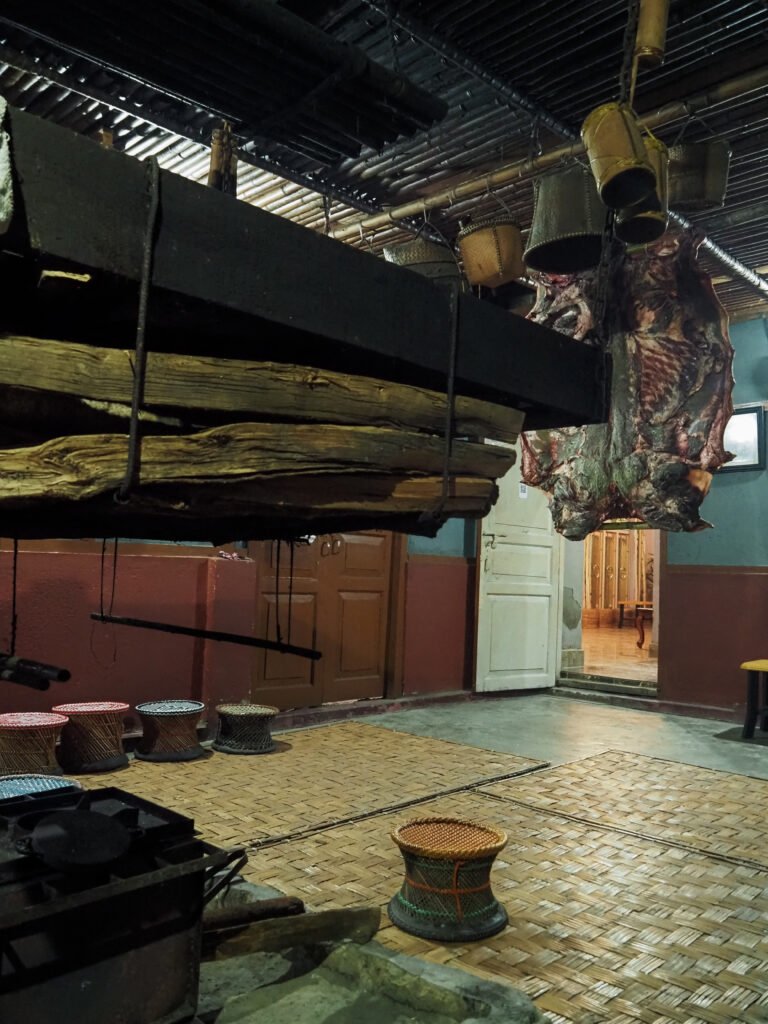
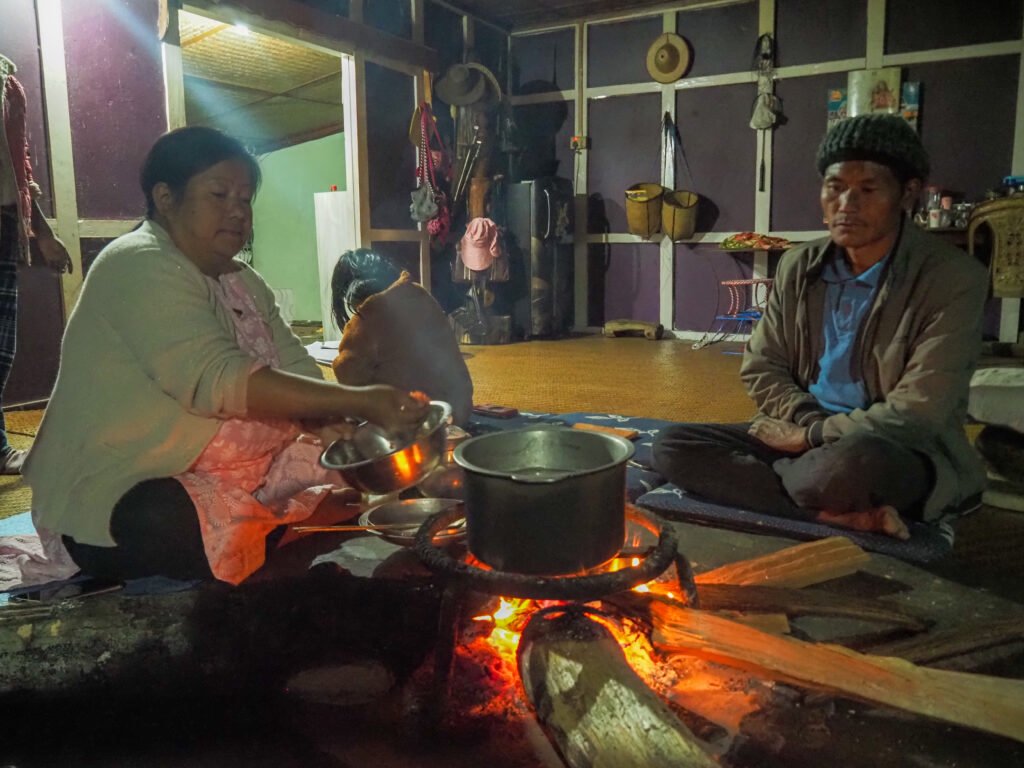
Ziro valley is home of the Apatani tribe, its people are particularly easy to identify, especially women, as they wear big, black and round wooden piercings on both sides of their nose and have tribal tattoos on their faces, one thick vertical line in the middle of their forehead and three thinner ones on their chin. Apatani people live in bambù houses and cook their food, almost entirely homegrown, in a traditional kitchen. This is the heart of the house, its most important room, and sometimes it does not only serve as kitchen (and dining room), but also as bedroom, since it is the only warm one in the house. A small wood-burning stove sits in the centre of the big room; deliciously smelling food cooks on it in big pots and around it everyone sits down to eat, drink chai and converse. The ceiling is also made of wood and is completely blackened by soot from the stove. But the ceiling isn’t the only thing that gets smoked by the kitchen stove. A big piece of meat hangs on the side of the stove, it is kept there for months, years, even 10 years, the longer the better. It is typically beef or pork, is stored in a pocket on the ceiling after being smoked for years and gets eaten only on special occasions. Thanks to its especially high value, it can also be sold by the family during financially challenging times.
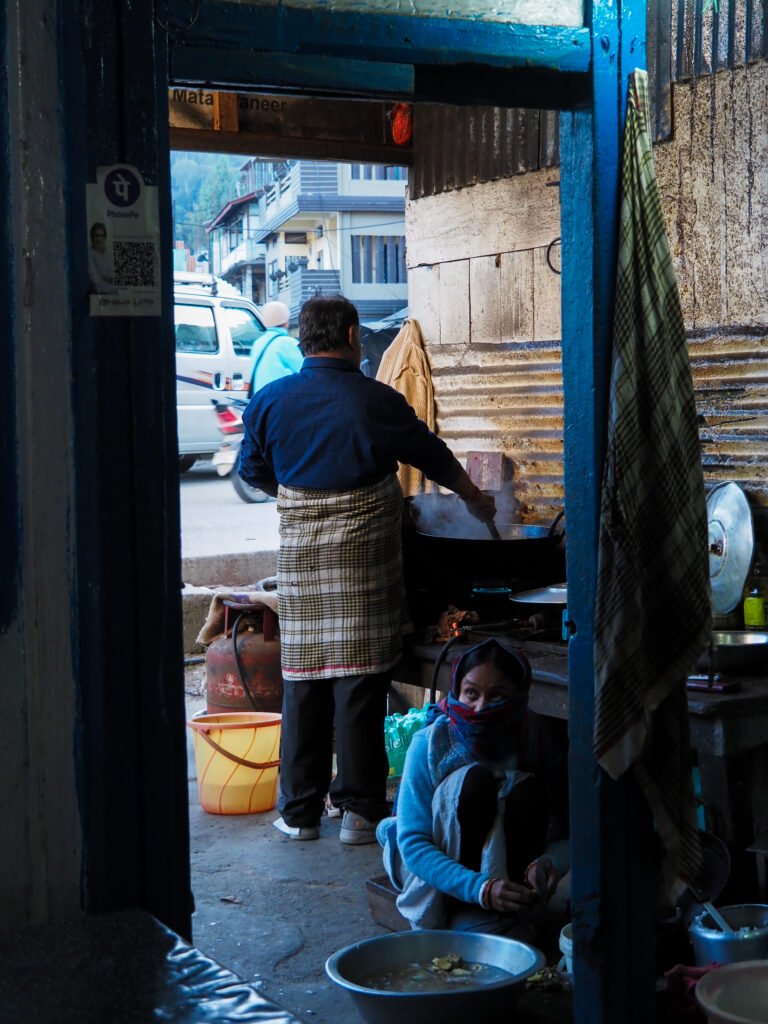
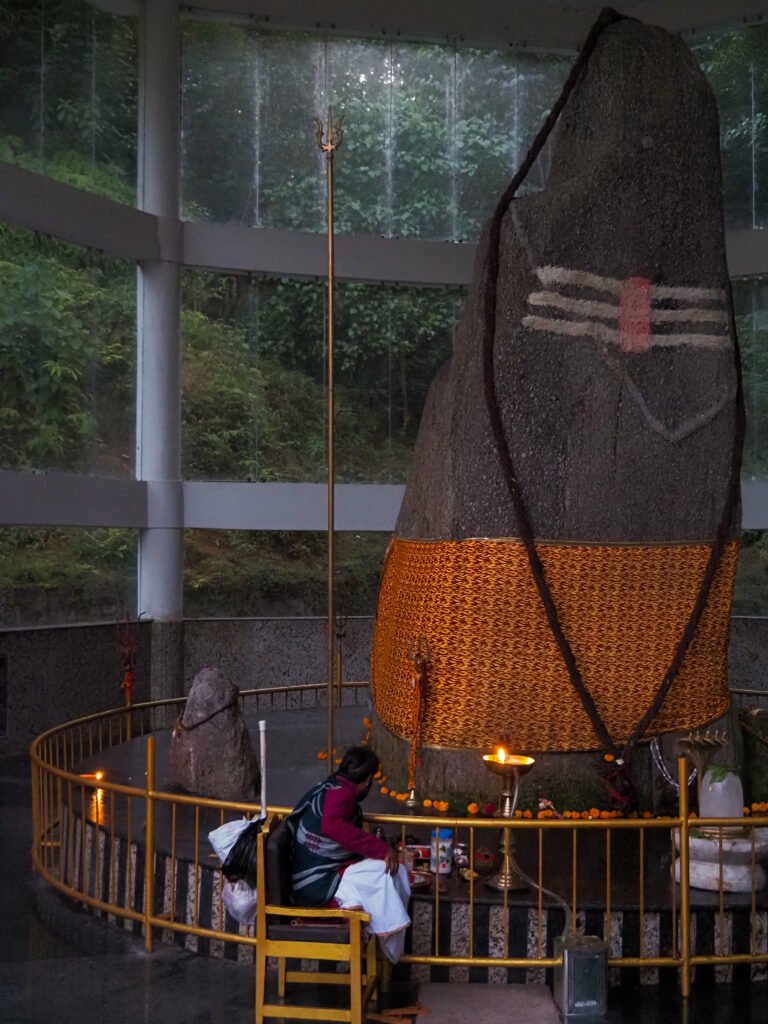
The religion of tribal people is Donyi Polo. This is an indigenous nature-based faith that worships the Sun (Donyi) and the Moon (Polo), as centres of order and wisdom. The second religion of Ziro is Catholicism. Despite these two religions being extremely distant from each other, people coexist peacefully. Indigenous people do not go to church, and catholics do not participate in Dony Polo’s rituals, sacrifices and ceremonies, like monkey hunting during the Myoko Festival.
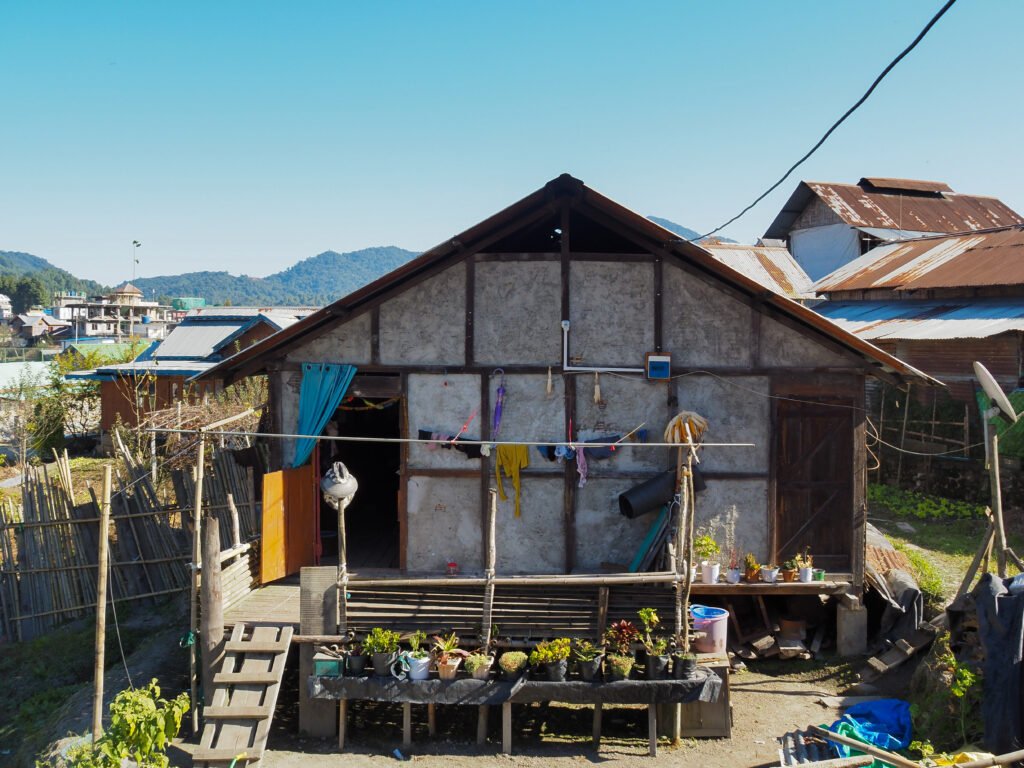
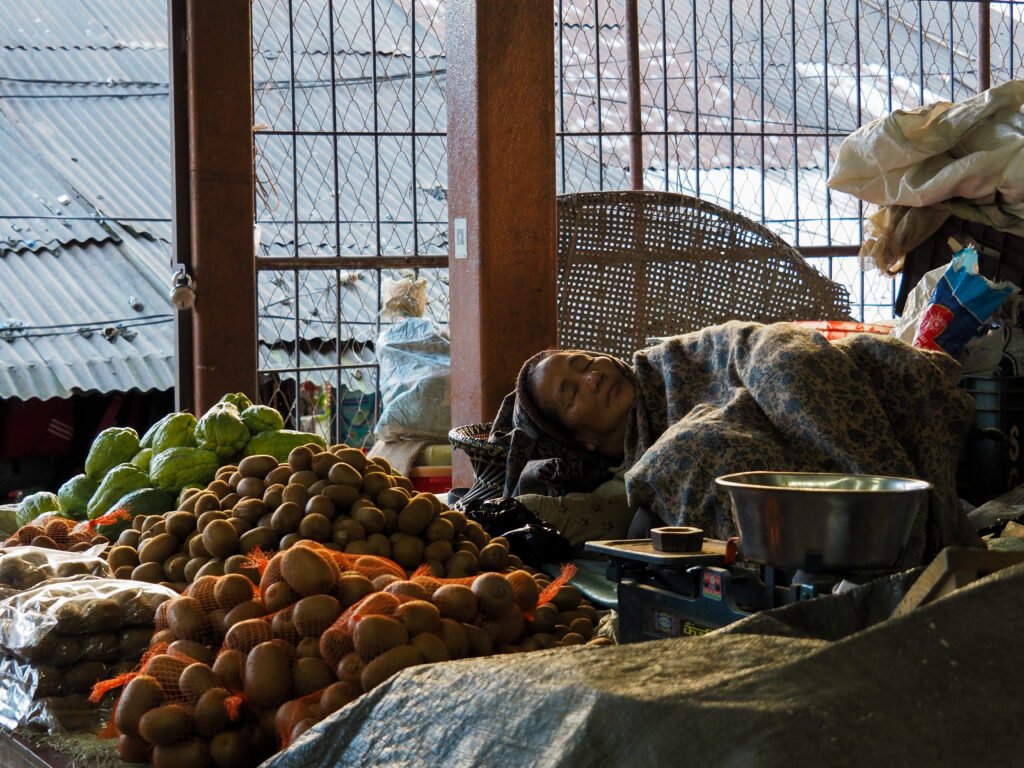
The owner of our homestay shows us numerous artefacts he proudly keeps in his kitchen. Some are displayed on the wooden walls, the more precious ones are kept safely in a case hidden at the bottom of an old wardrobe. Among the latter there is a tribal sword originally used during traditional animal sacrifices and passed down from generation to generation for decades if not centuries. The sheath is made entirely of bear skin, the shoulder strap decorated with shells. Hanging from the sword hilt is a jawbone with large, real tiger teeth. It is truly a priceless work of art.
The dao (sword) is an integral and central element of the peoples tribal culture and this, although being by far the most impressive one, it will definitely not be the last traditional dao we’ll encounter during our exploration of Arunachal Pradesh.
Aalo
Aalo is a buzzling town in the heart of the region and a hub to reach more remote destinations in the north east of Arunachal Pradesh.
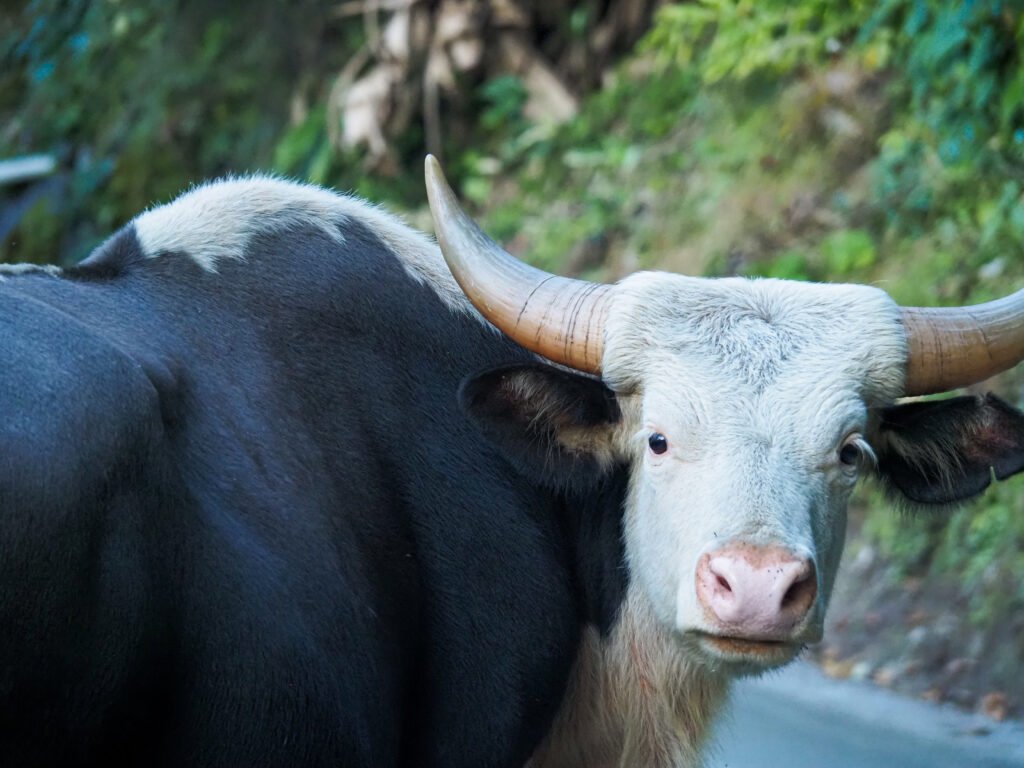
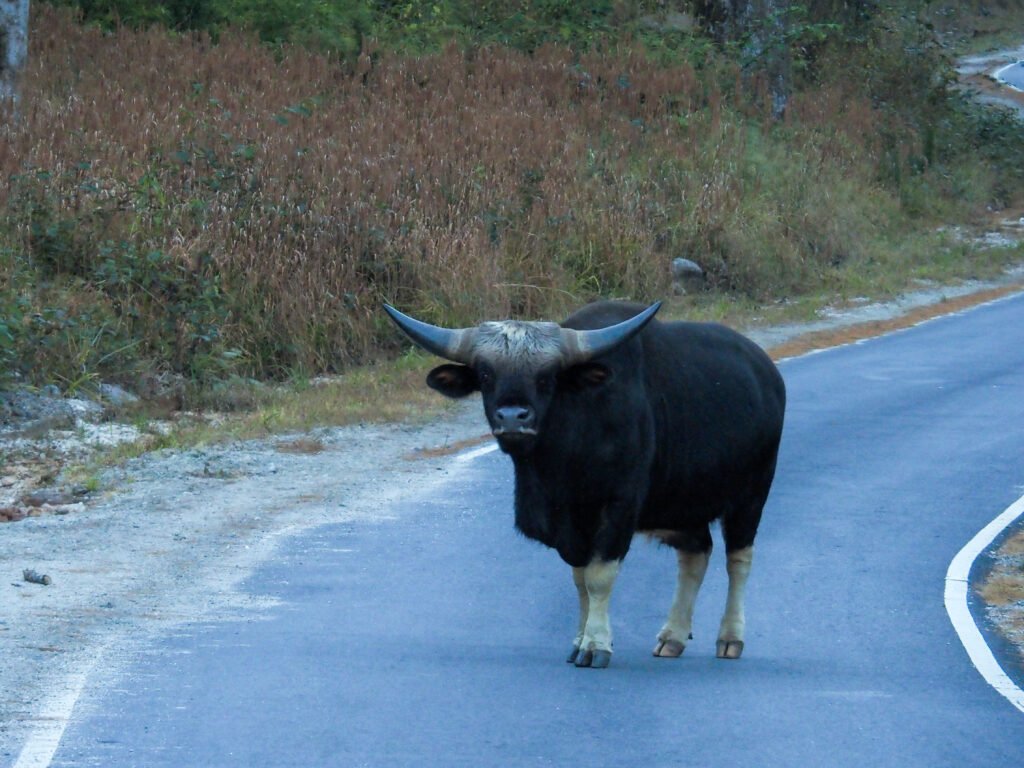
For the Gallo tribe that inhabits this region, as for the other tribes of the area, a central role in the local tribal culture is played by the mithun. The mithun is a large bovine (an adult specimen can weigh up to 600 kg), it is a mix between a cow and a bison and is endemic only to Arunachal Pradesh and the surrounding regions of Nagaland, Manipur and Mizoram. It is semi-domesticated by the people of the region, it is reared free-range in the jungle surrounding the villages and its only supplementary feeding is the salt provided by their care-taker. Mithuns recognise their guardian by the unique sound that he or she makes when calling them. Almost every family of the village owns one or more of these animals, their mithuns can be distinguished from the others by a specific cut on the animal’s ear, which is unique to that specific family.
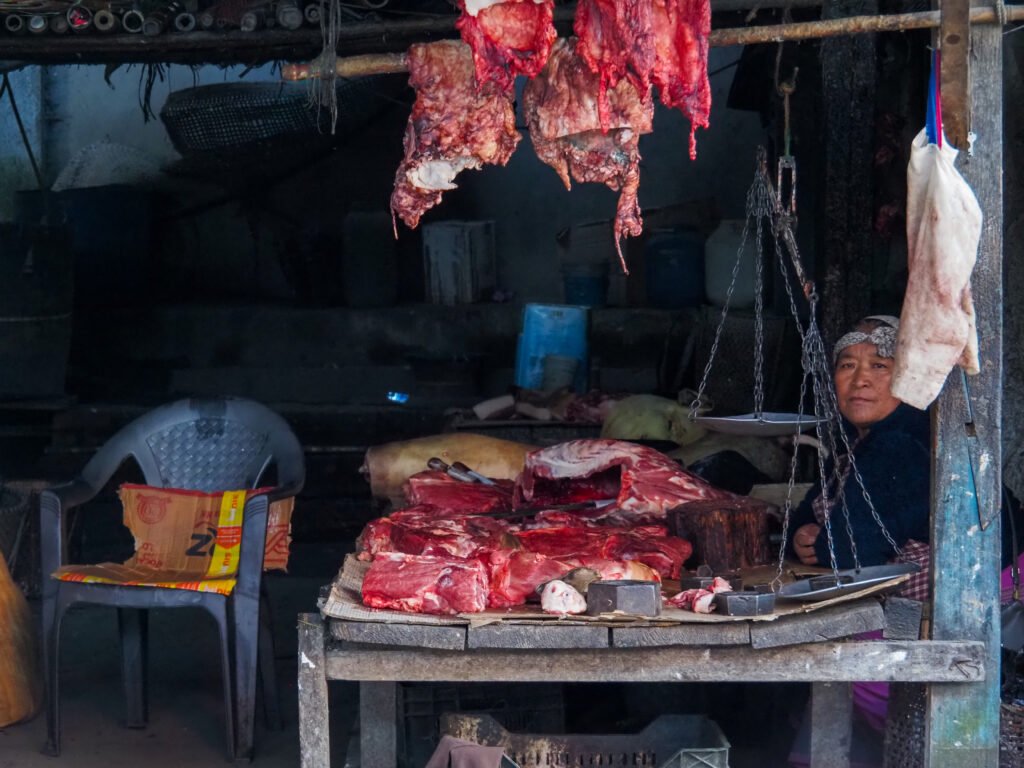
The mithun is a holy animal for Arunachal Pradesh tribes and its meat is the most valuable on the market. Mithun meat is not easily found and it is reserved only for special occasions such as festivals and weddings. On these events, the animal is sacrificed in traditional rituals, and every tribe has a different way (and tools) to do it. Before the wedding, the soon-to-be husband is expected to bring to the bride’s house 10 to 15 (live) mithuns, the mother of the bride then gifts her daughter a tribal necklace made of coloured pearls as a sign of approval. This is a precious jewel that is traditionally passed on by mother to daughter for centuries. Before the ceremony, the groom also has to personally sacrifice a mithun, Gallo tribes do it with an axe on the animal’s back of the neck, ideally with a single strike. The owner of our homestays confesses that he didn’t want to kill the animal before his wedding, but he had to do it to show his fiancé’s family that he was worth it.
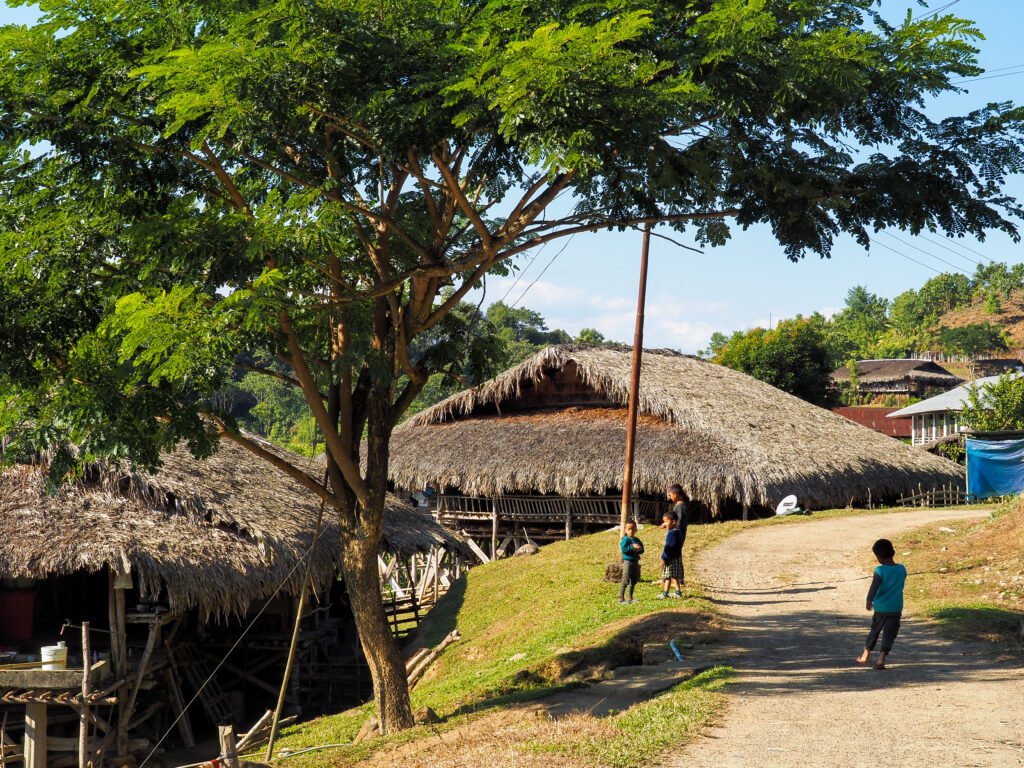
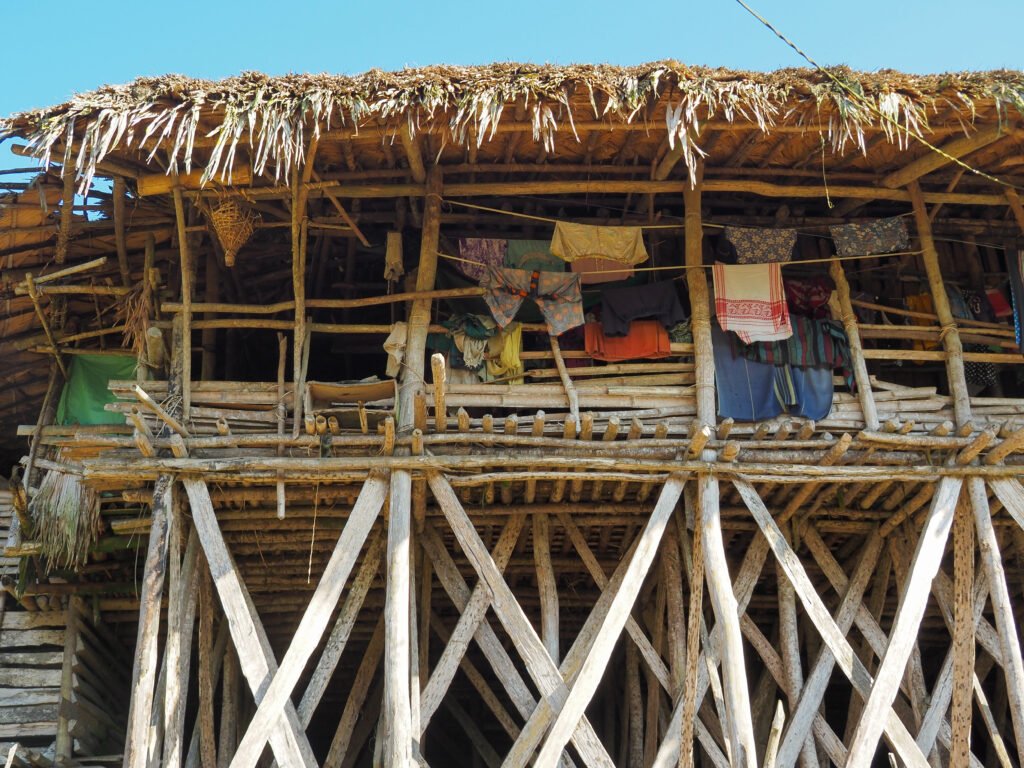
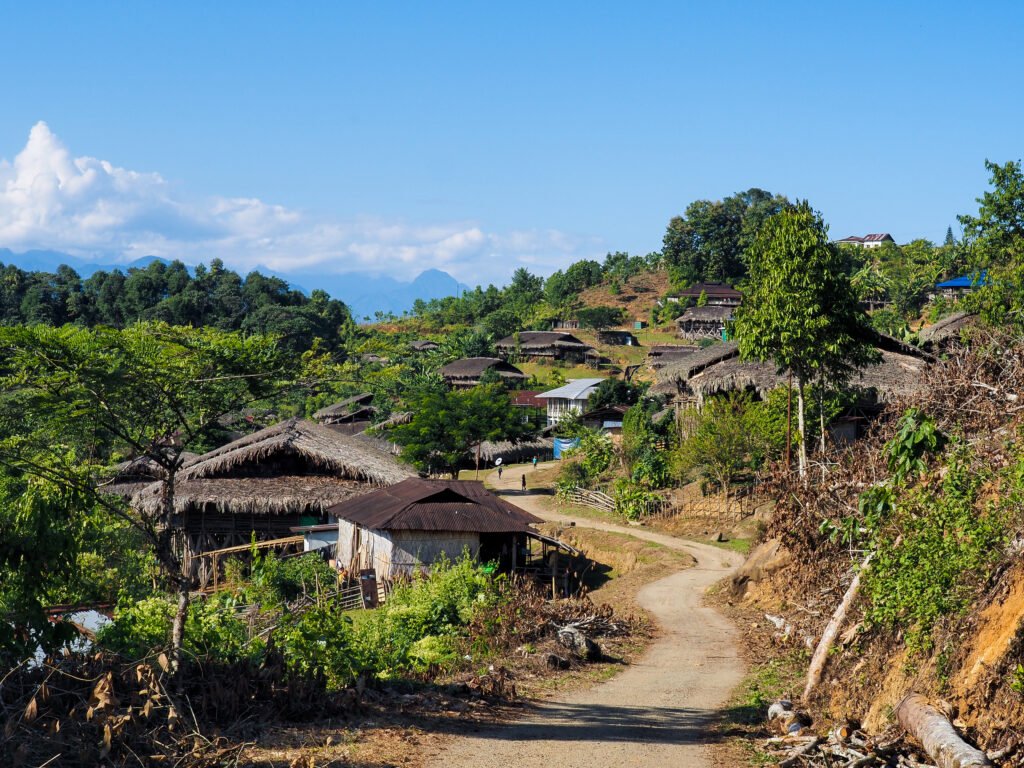
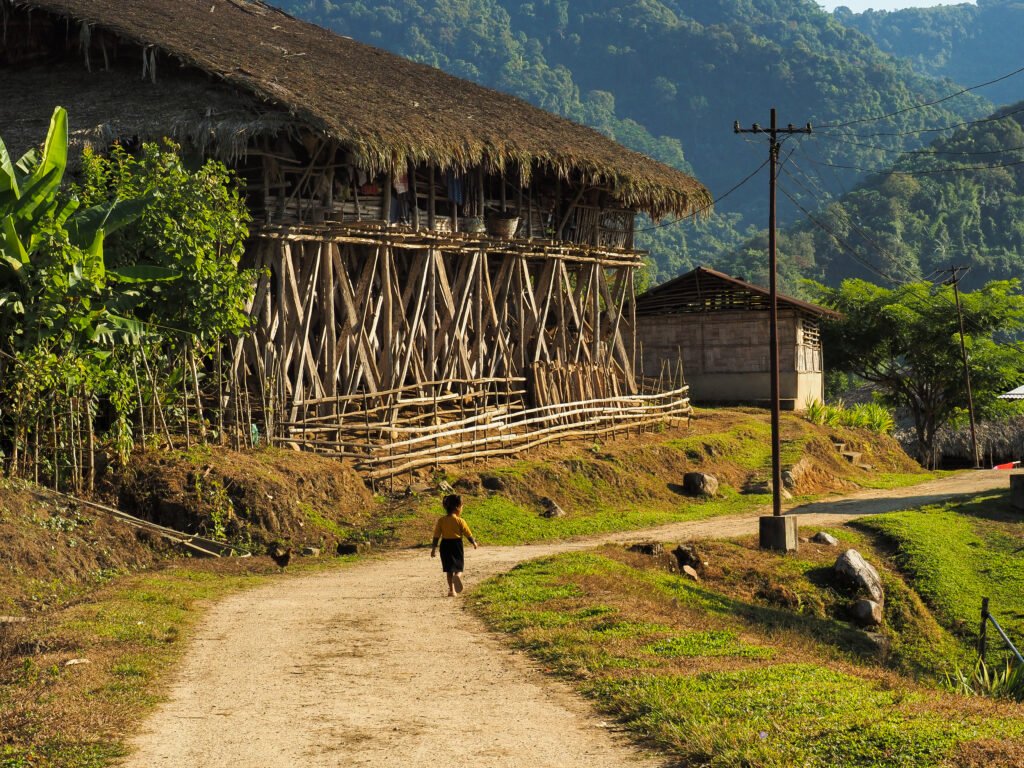
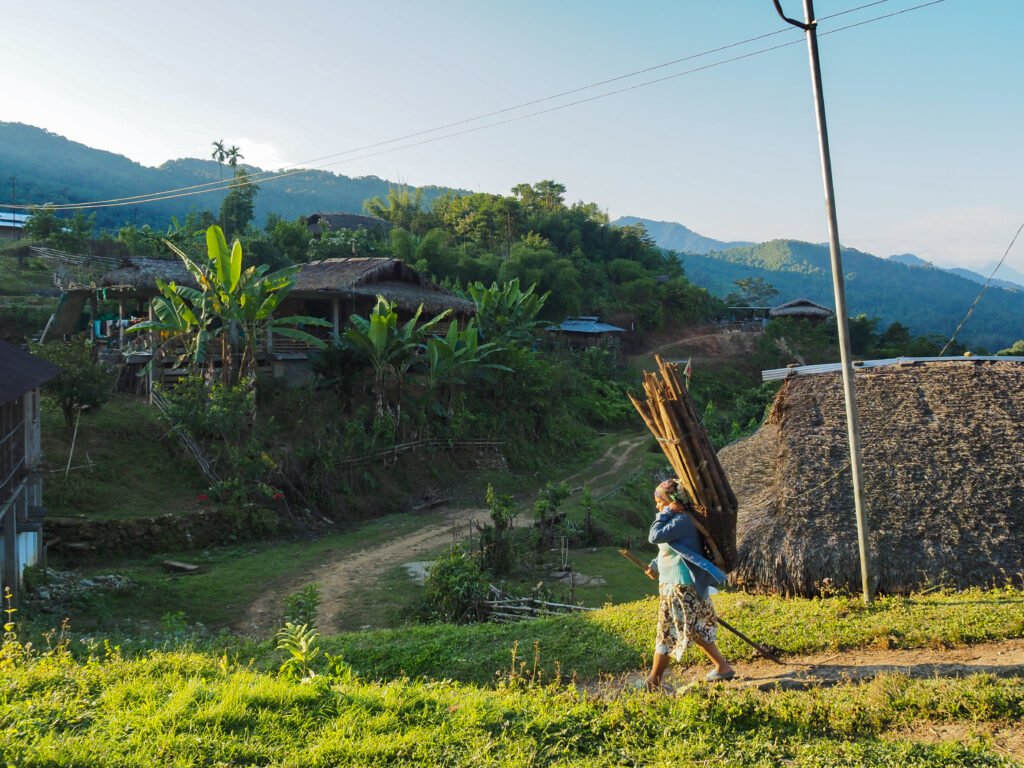
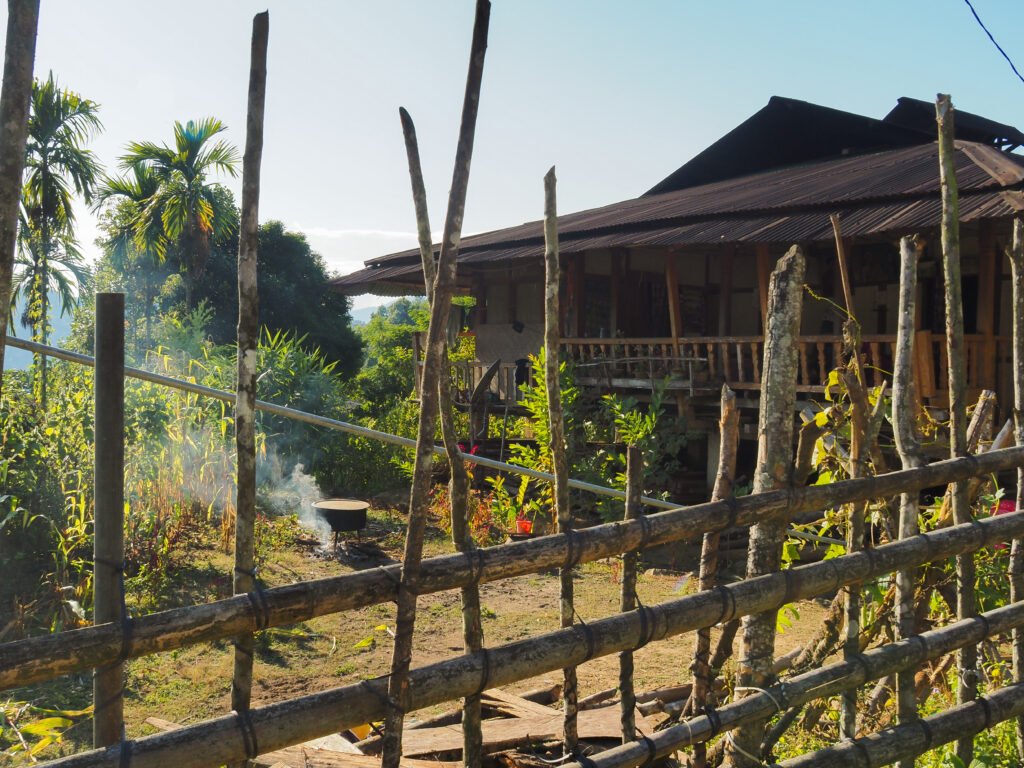
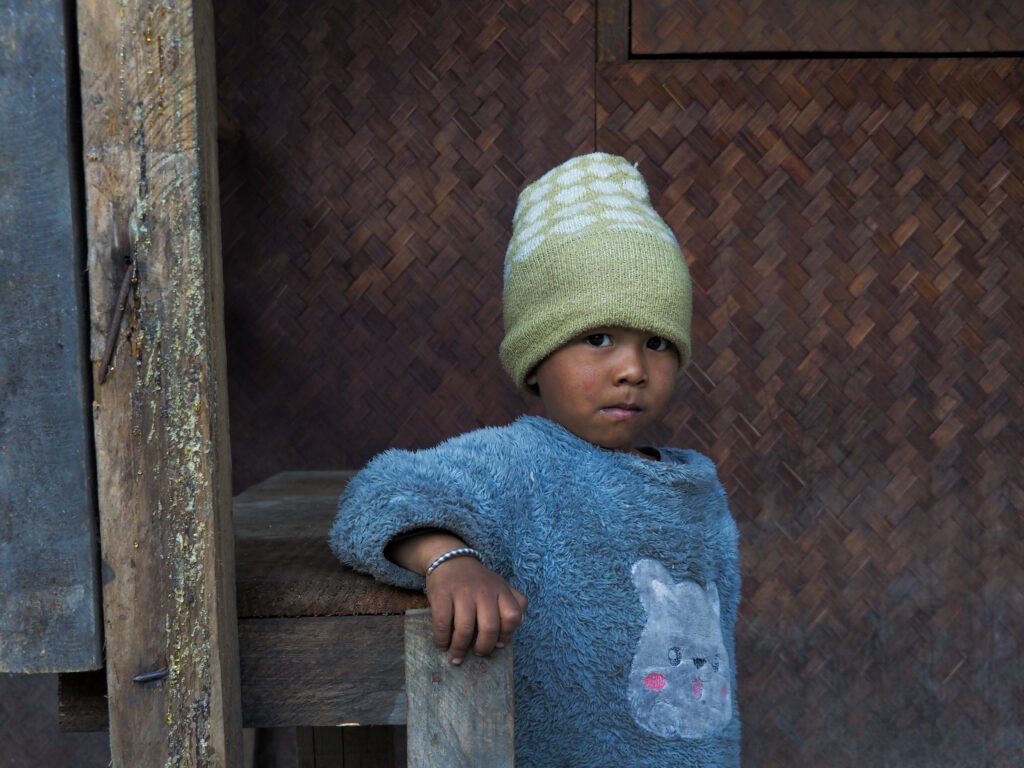
Around Aalo, well hidden in the endless jungle-green valleys, lie quiet little villages where time seems to have stood still for decades. People here live in big traditional houses made entirely of wood and standing on big poles. Most elements of the house, such as doors, floors, balconies and fences, are built from bambù, while the thick roof is made of thatch. Kids and stray dogs play peacefully on the main small dirt road surrounded by orange, grapefruit and banana trees. In front of the entrance of each house flies high a little white flag depicting a red sun, the Donyi Polo symbol. People invite us in their houses to drink tea and eat some oranges and grapefruit. The great majority of them don’t speak any English nor Hindi, a few younger ones try to explain to us that we are the first tourist they have ever seen. We feel honoured and warmly welcomed as we walk away with our pockets full of oranges, the best oranges ever tasted.
Menchuka
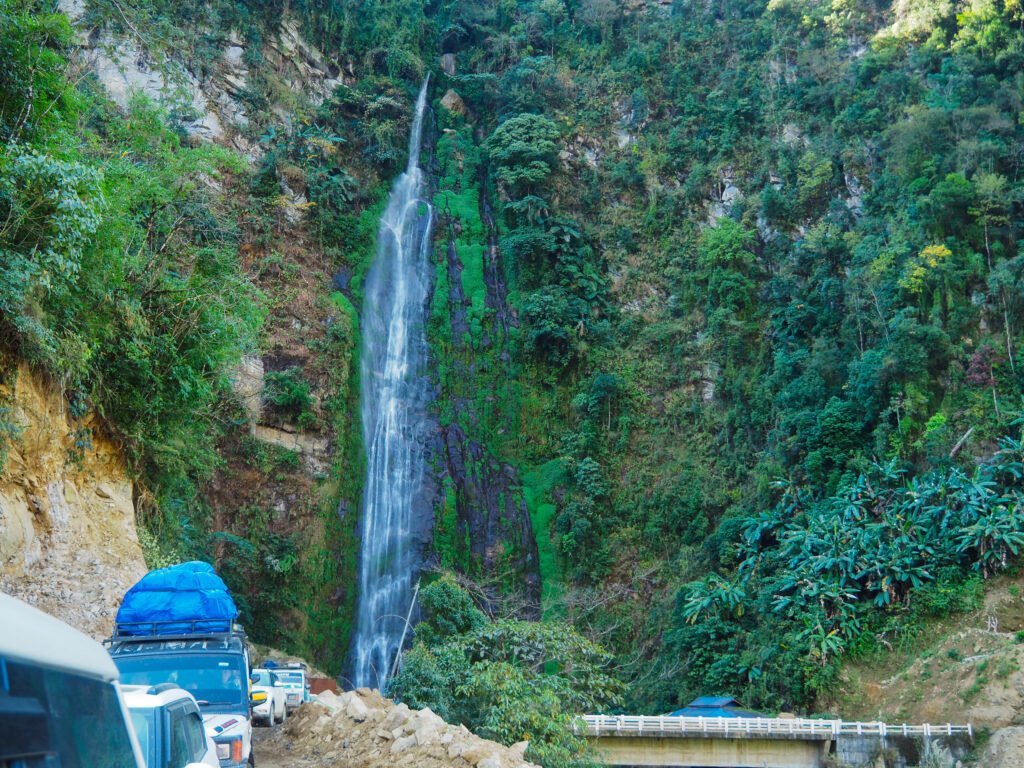
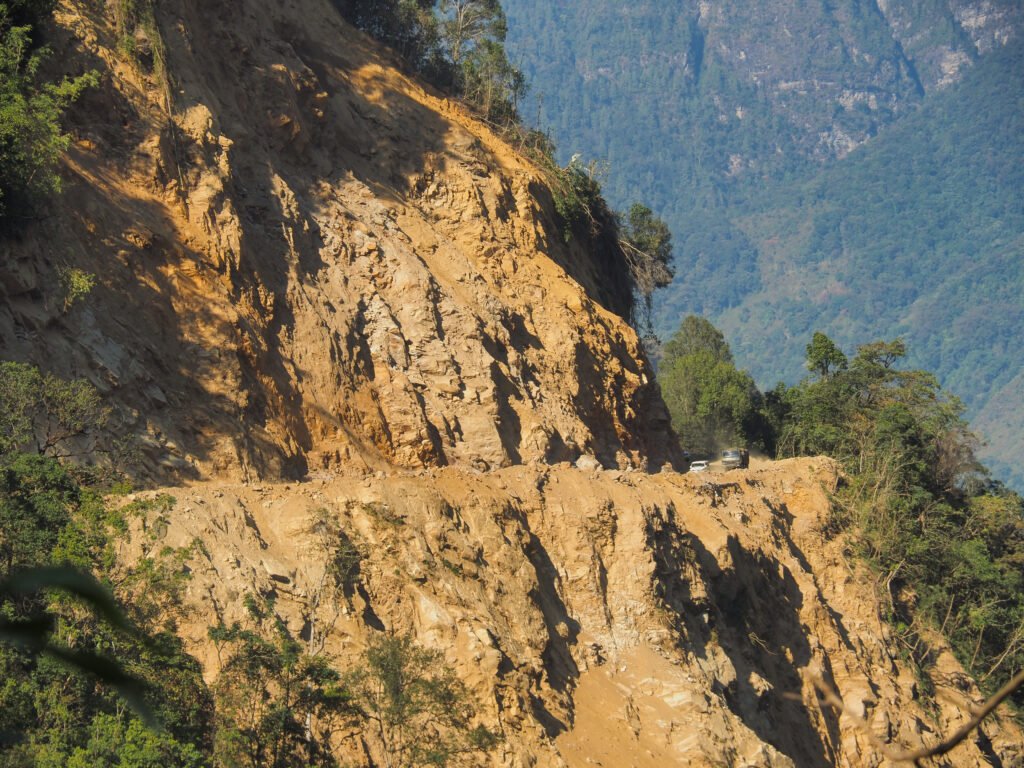
The road to Menchuka is adventurous to say the least. It is a 7 hour drive (if you’re lucky) on a bumpy single lane dirt road that climbs up the side of steep valleys. The view is breathtaking and the most common encounters on the way are road works, big military trucks, mithuns and plenty of landslides blocking part of the already narrow road.
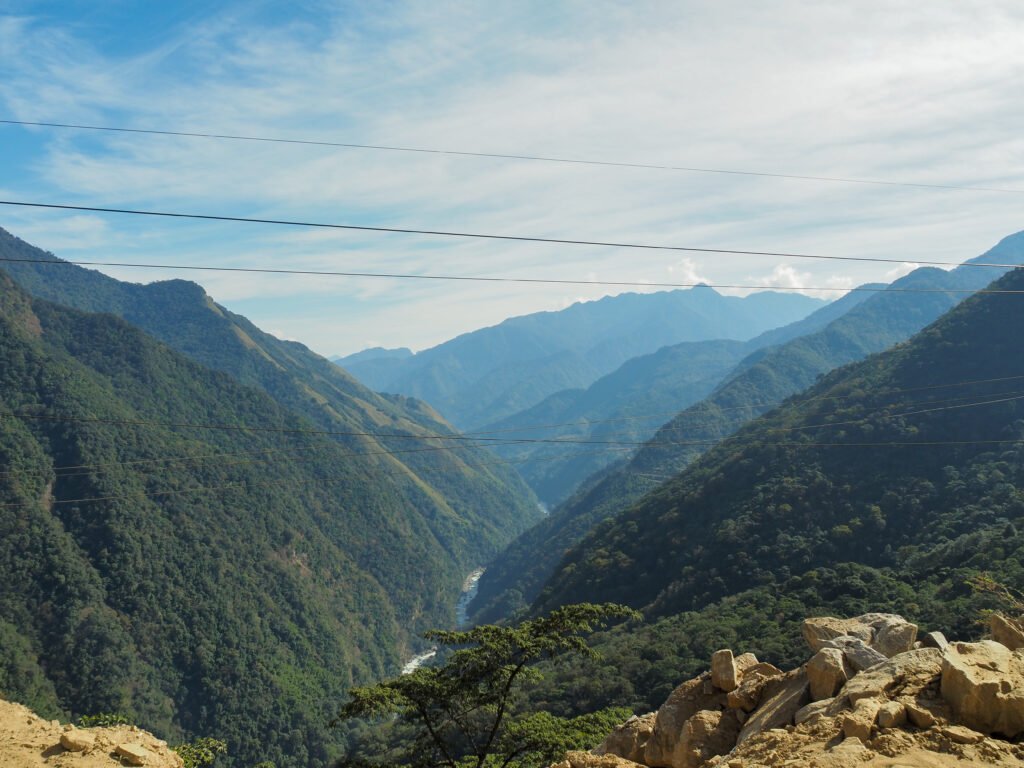
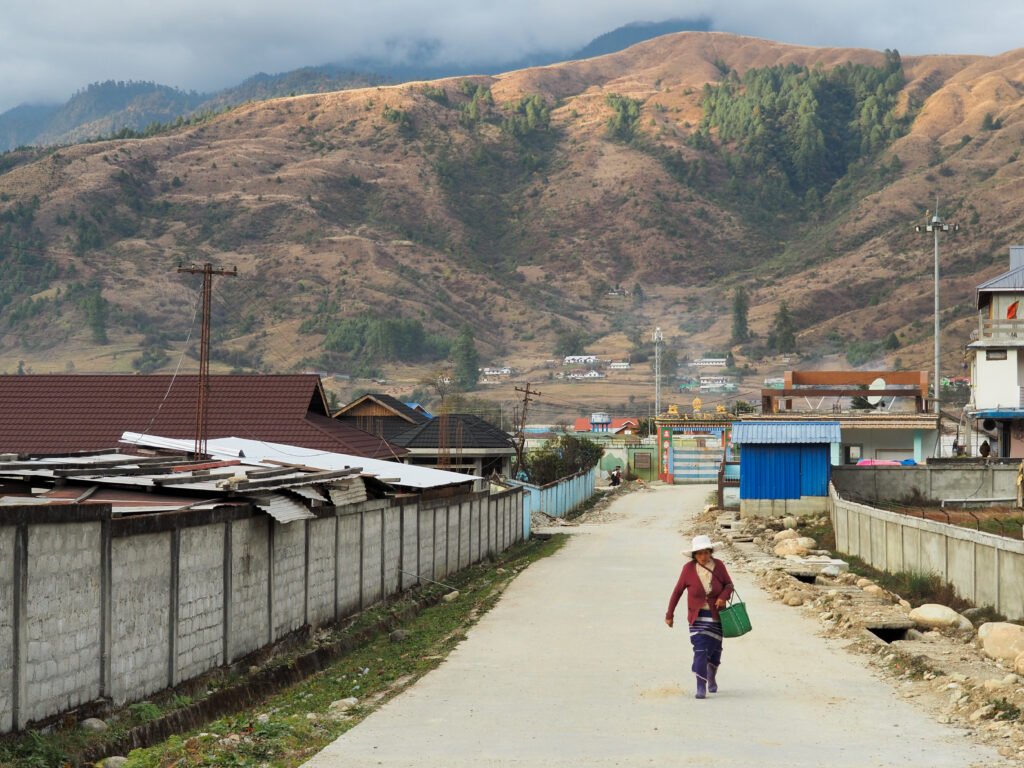
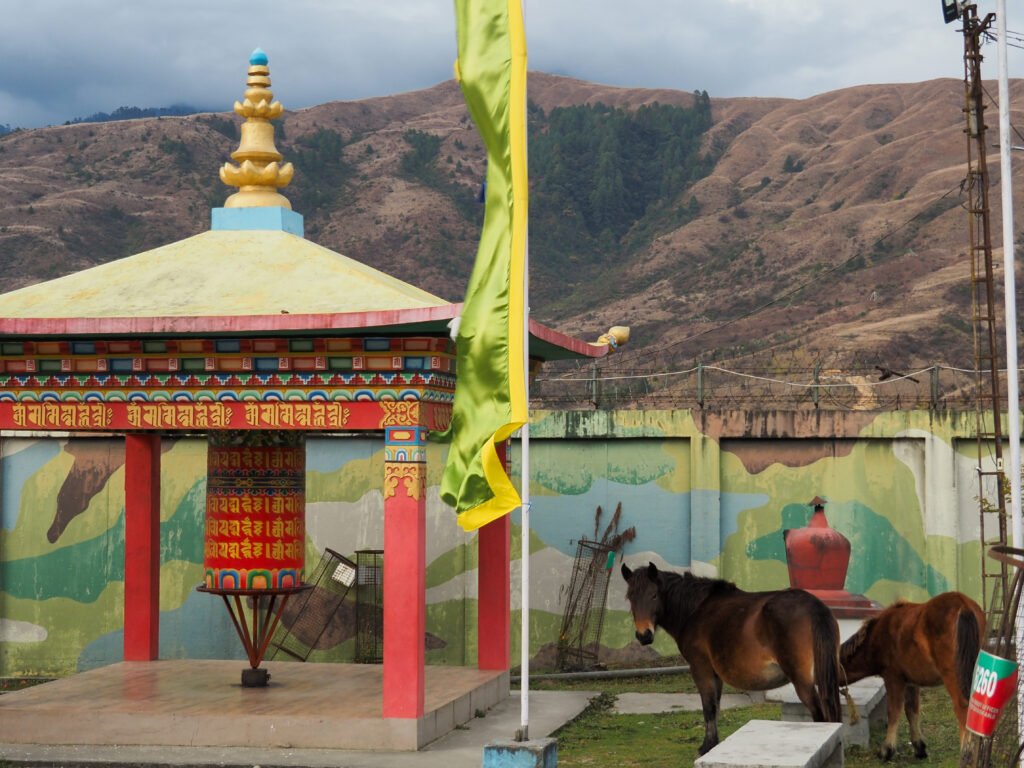
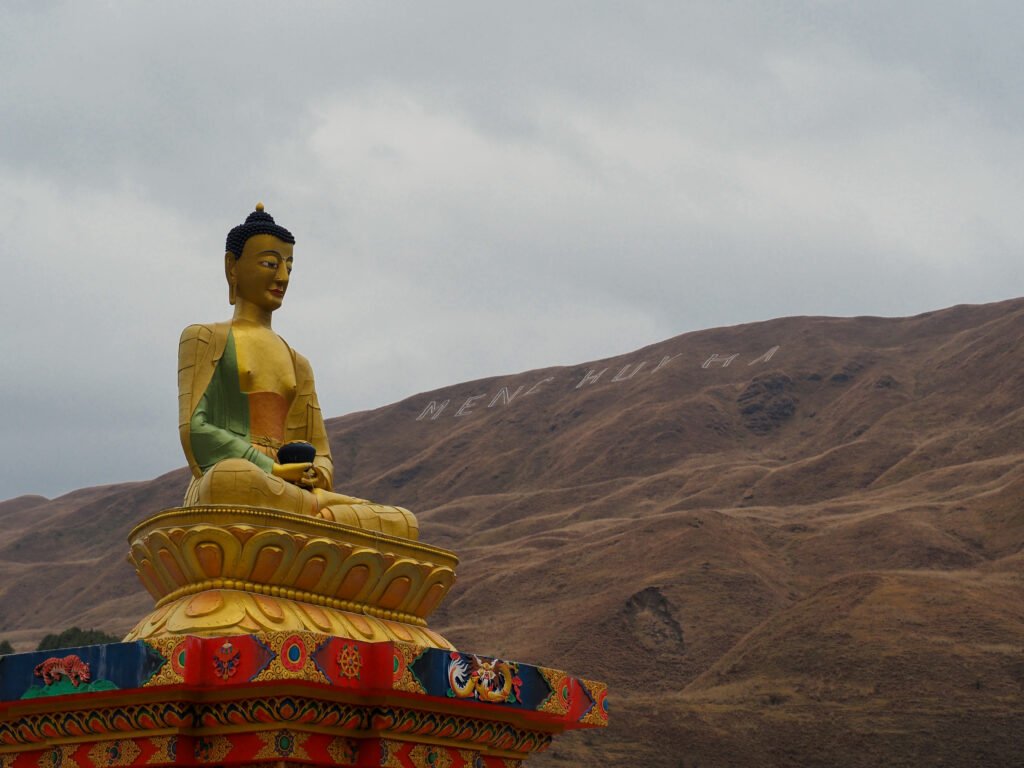
The destination is definitely worth the bumpy trip. The name Menchuka means “Valley of medicinal snow”, referring to the sacred waters of this region. The town lies only 29 km from the border with Tibet and that explains the rich Tibetan Buddhist culture of the local Memba tribe.
Buddhism is the first religion here, followed by Donyi Polo and Catholicism. In this area, beautiful ancient monasteries sit on top of the hills and oversee the whole valley, like the 400-year-old Samten Yongcha, which not only treasures stunning and colourful Buddhist statues and paintings, but also precious and incredibly ancient religious writings, safely kept in a dedicated room of the wood temple.
Given its proximity to the border, this is also a very active military zone, with almost half of the region’s total population consisting of army soldiers (total population being between 10 and 15k).
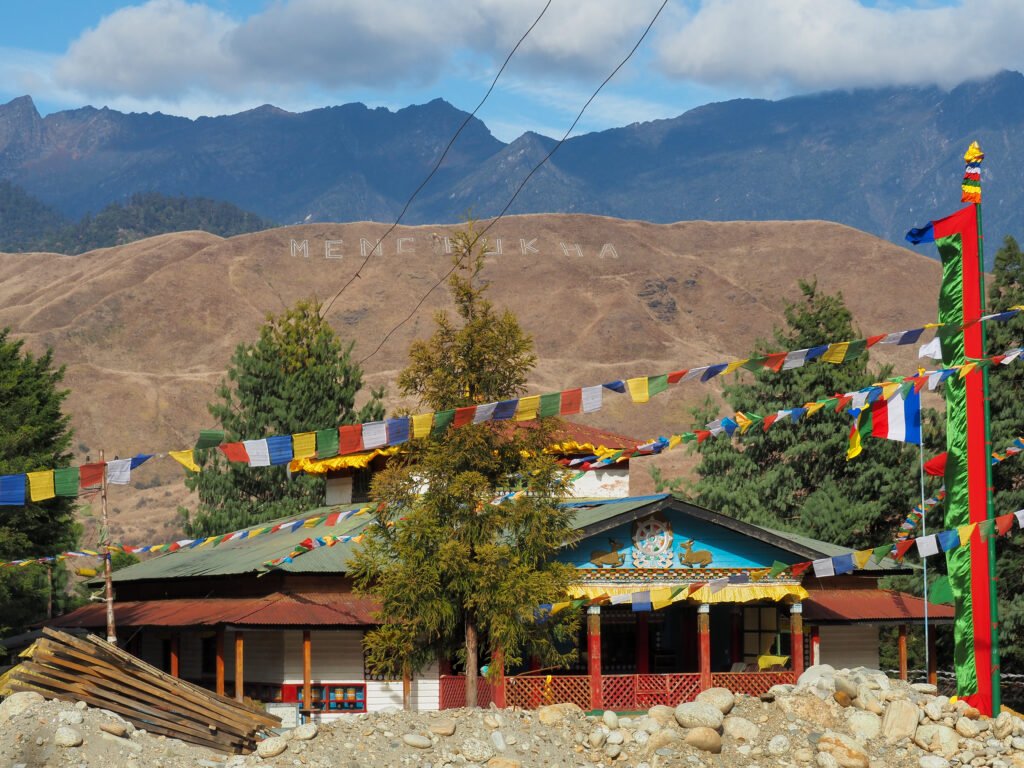
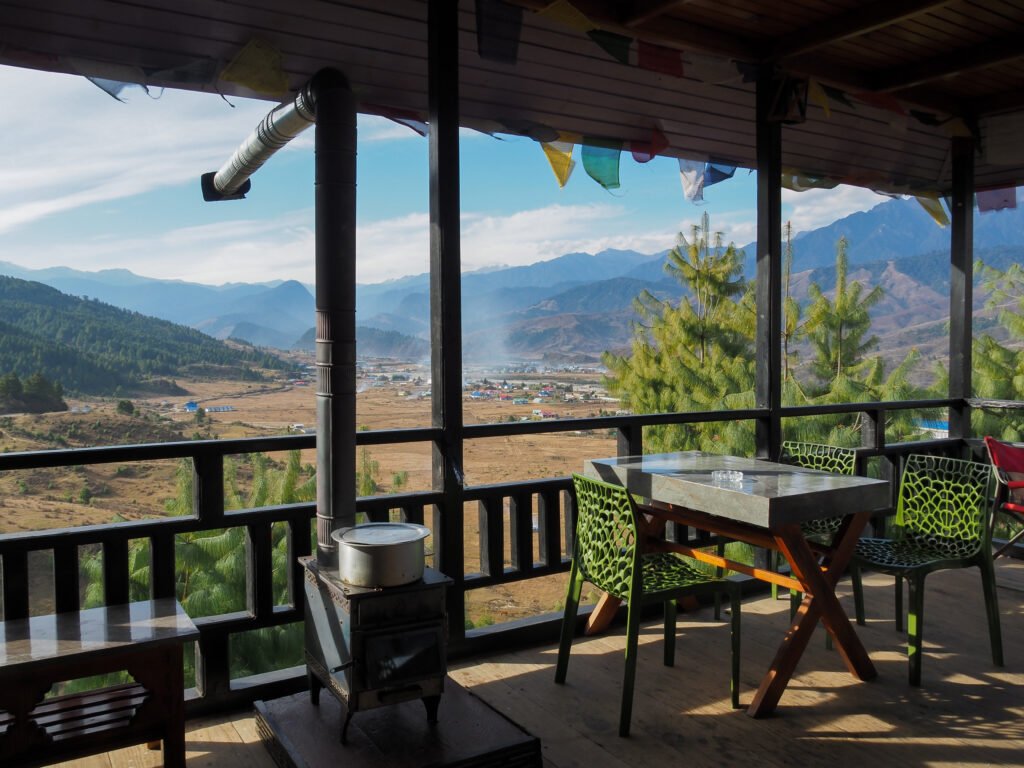
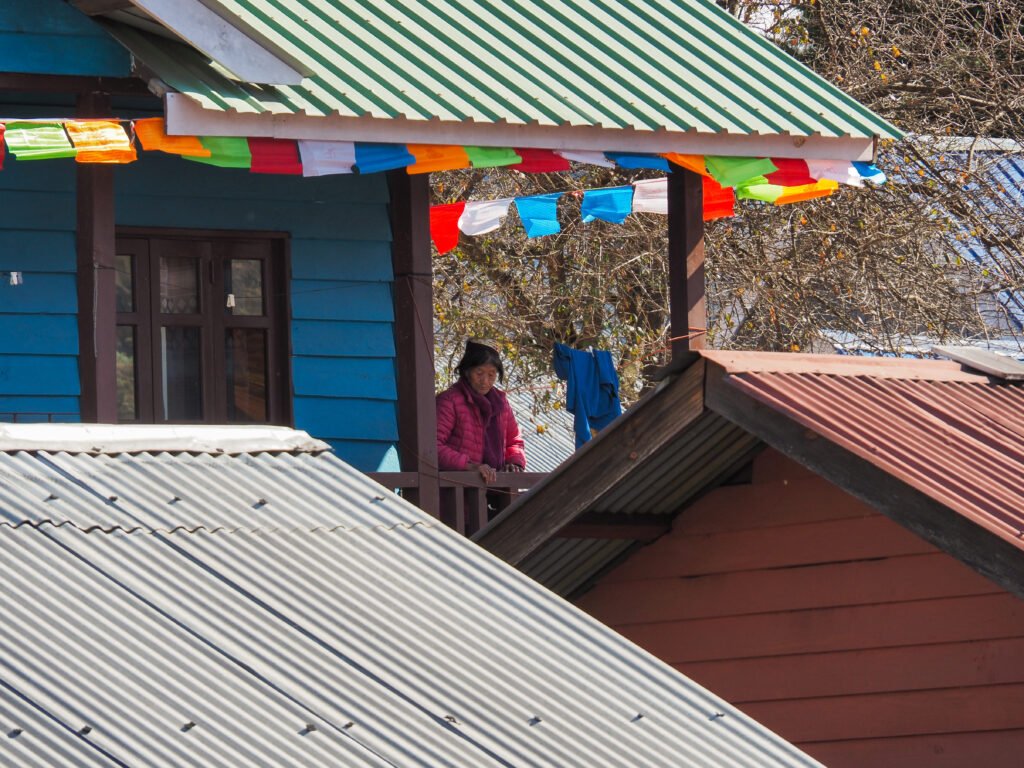
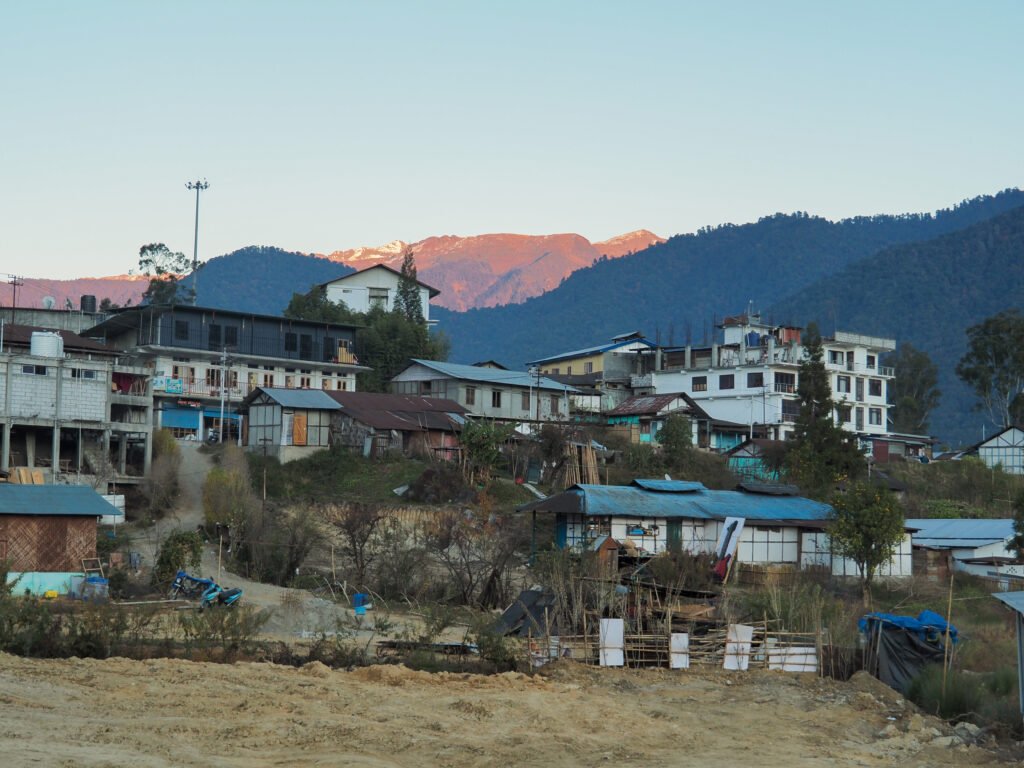
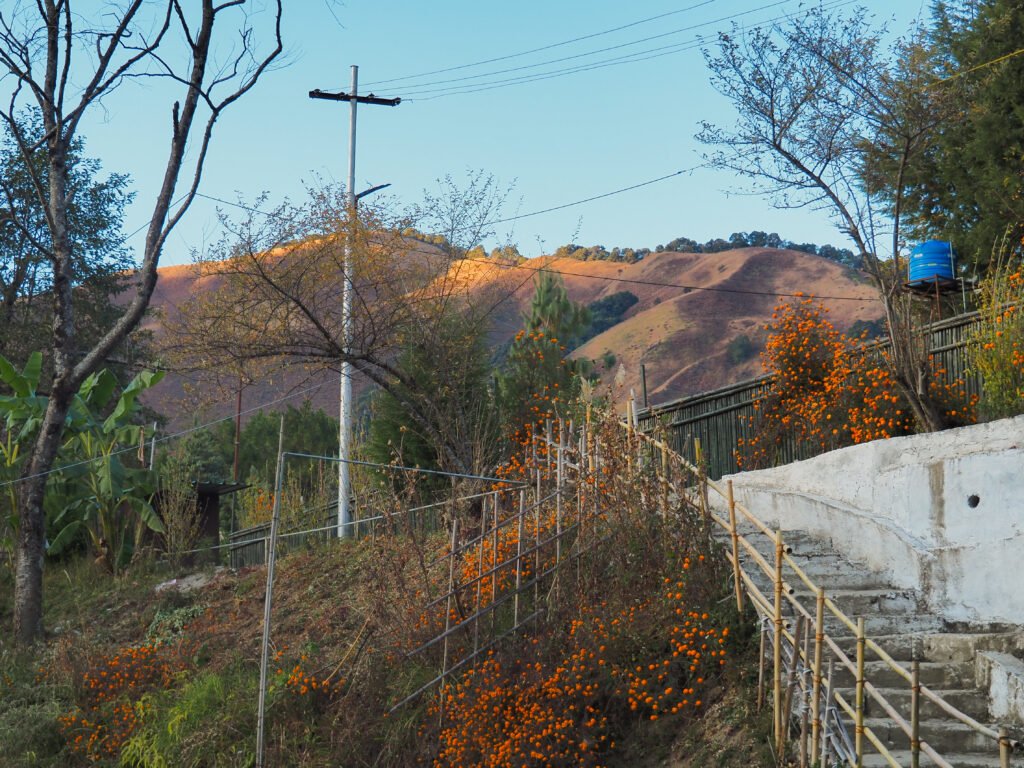
Menchuka valley sits at almost 2000 masl and it is decorated by the blue, red and white colours of its wooden houses’ roofs. There is an incredibly small airport at the centre of the town, used almost solely for military and supply purposes, and a placid river with icy water that flows alongside. White smoke rises from the millet and wheat fields of the valley, where dry crops are burnt after the harvesting period. Just above the town and the surrounding fields, big beige velvet-like hills and tall dark green mountains in the background oversee the whole valley.
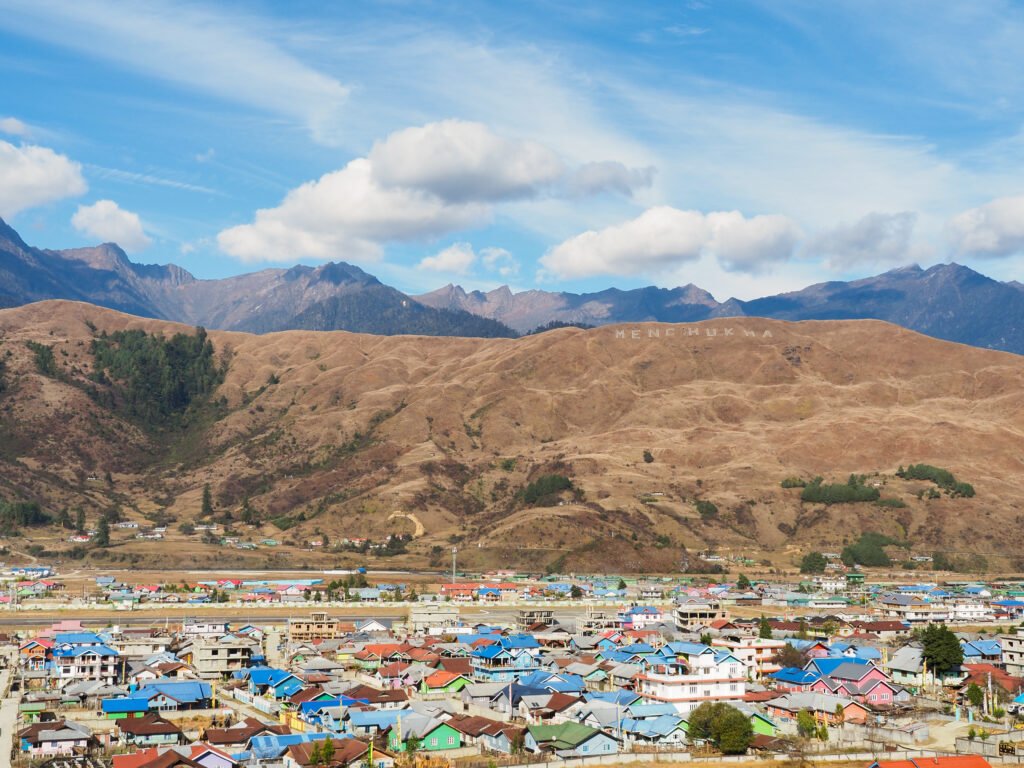
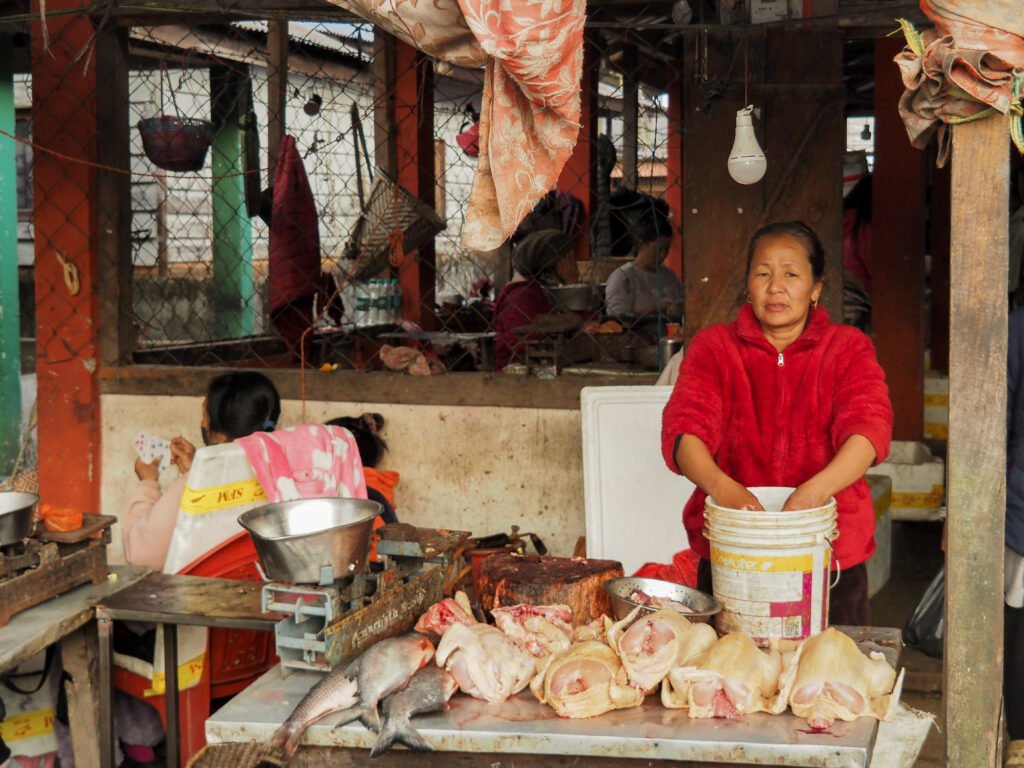
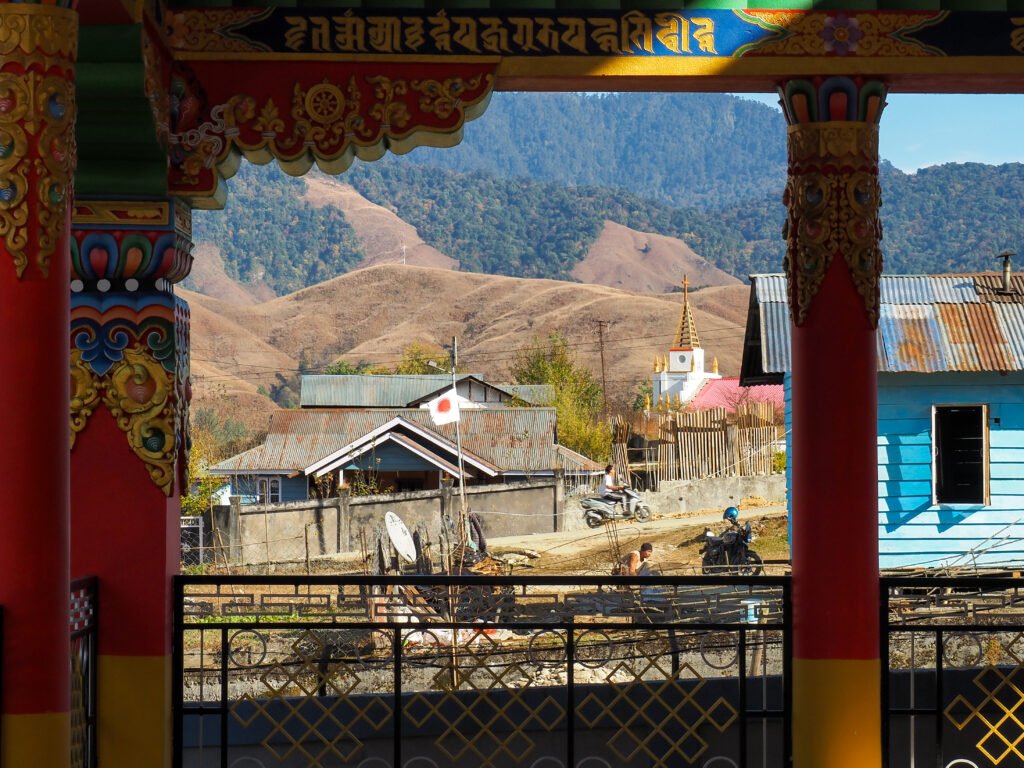
Menchuka is so remote that is commonly referred to as the “the Forgotten Valley”. The town receives electricity for just a couple of hours throughout the day, for the rest of it people rely on generators for basic needs. Phones get service maybe one hour per day on sunny days and none at all if it is cloudy, and even when it’s there, the connection is very unreliable. There is also no heating, despite getting extremely cold, especially during the winter months, where temperatures drop below zero. The only warm room of the wooden houses is the kitchen, thanks to the traditional stove placed at the centre of it and beautifully decorated with Tibetan motifs.
The main industries of the region are timber, for construction, heating and cooking; handicrafts, mainly textiles; and road infrastructure. Many female and male inhabitants of Menchuka are employed by the Border Road Organisation (BRO) to build, maintain and repair the rough roads from the numerous landslides that affect the region especially during the monsoon season.
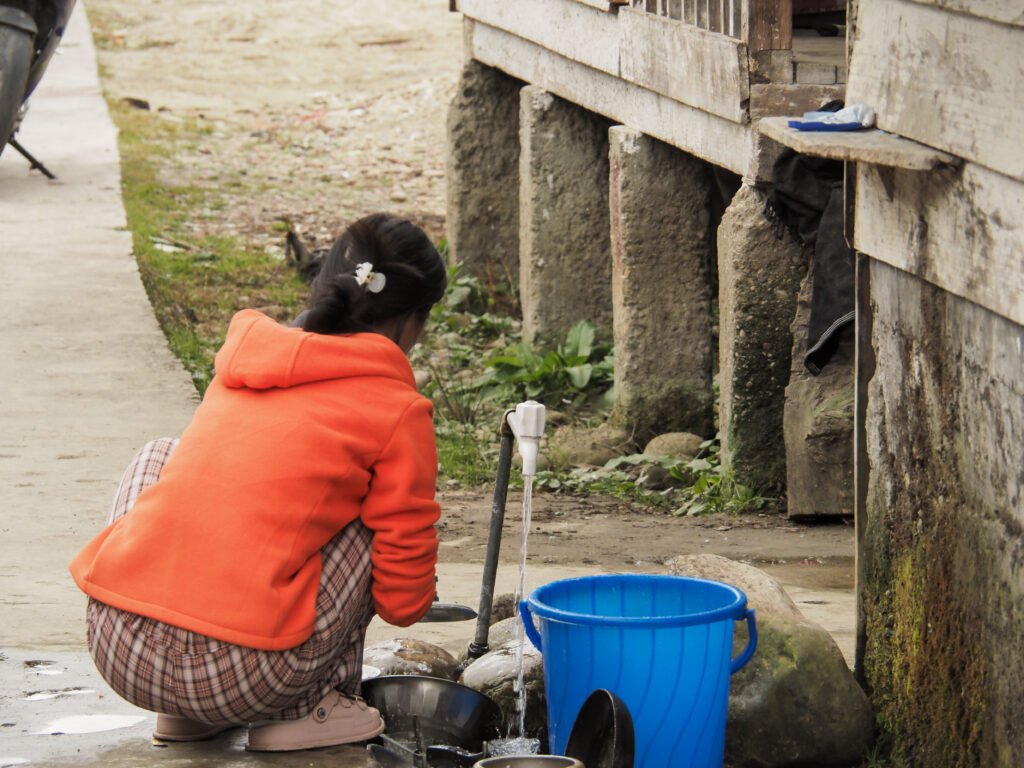
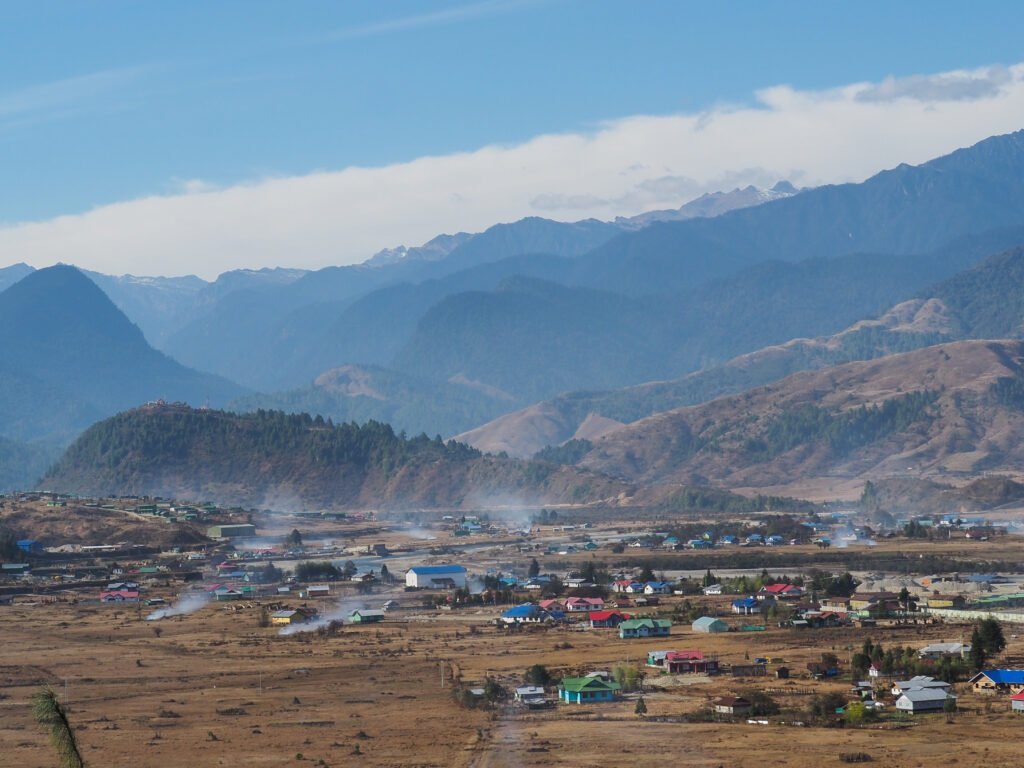
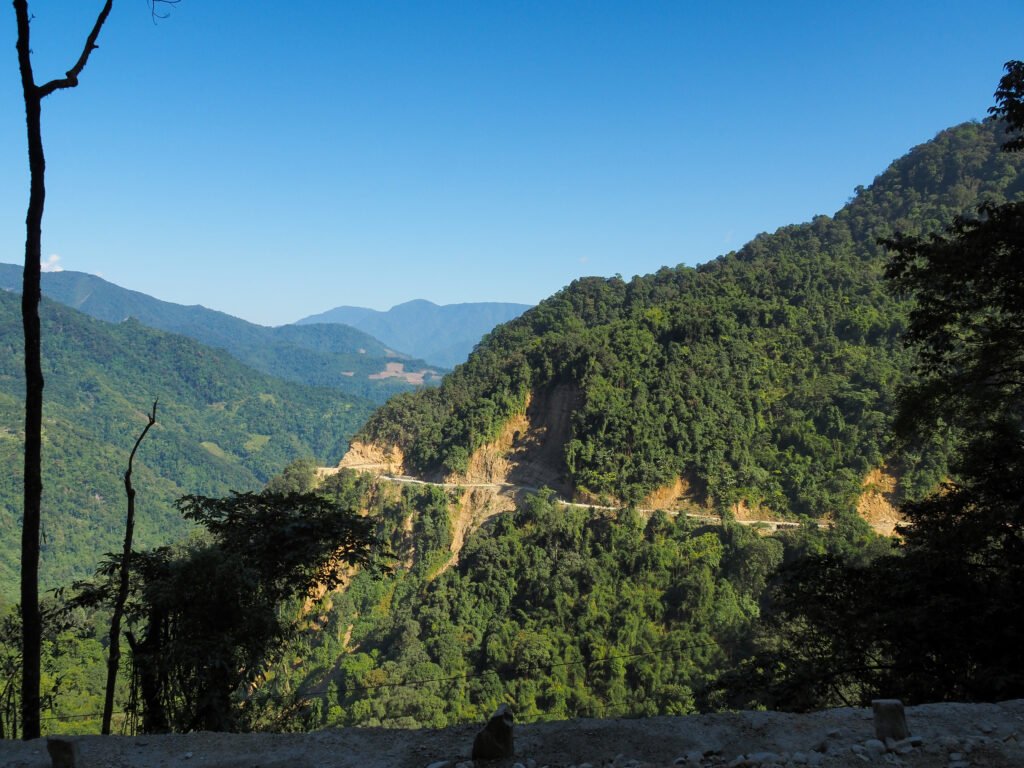
At the end of our stay in Menchuka we set off on the bumpy road before dawn and drive until the afternoon along the ridge of mountains overlooking deep gorges, between road closures, heavy machinery and dust; as if it weren’t already difficult enough to leave such a magical place.
Anini
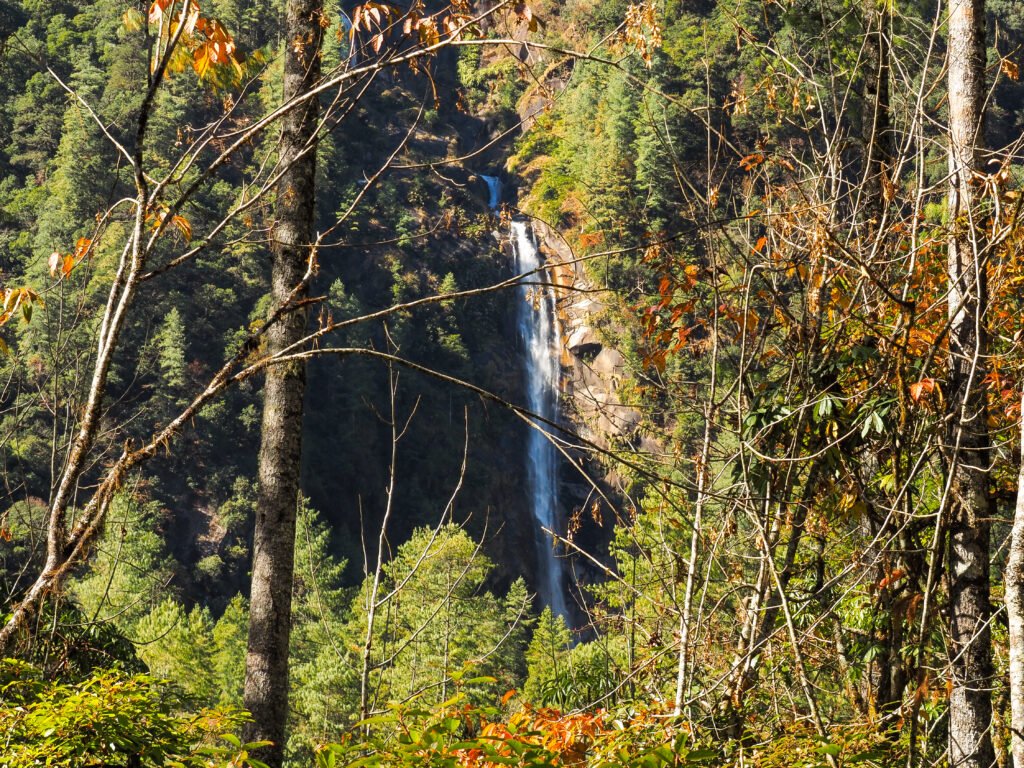
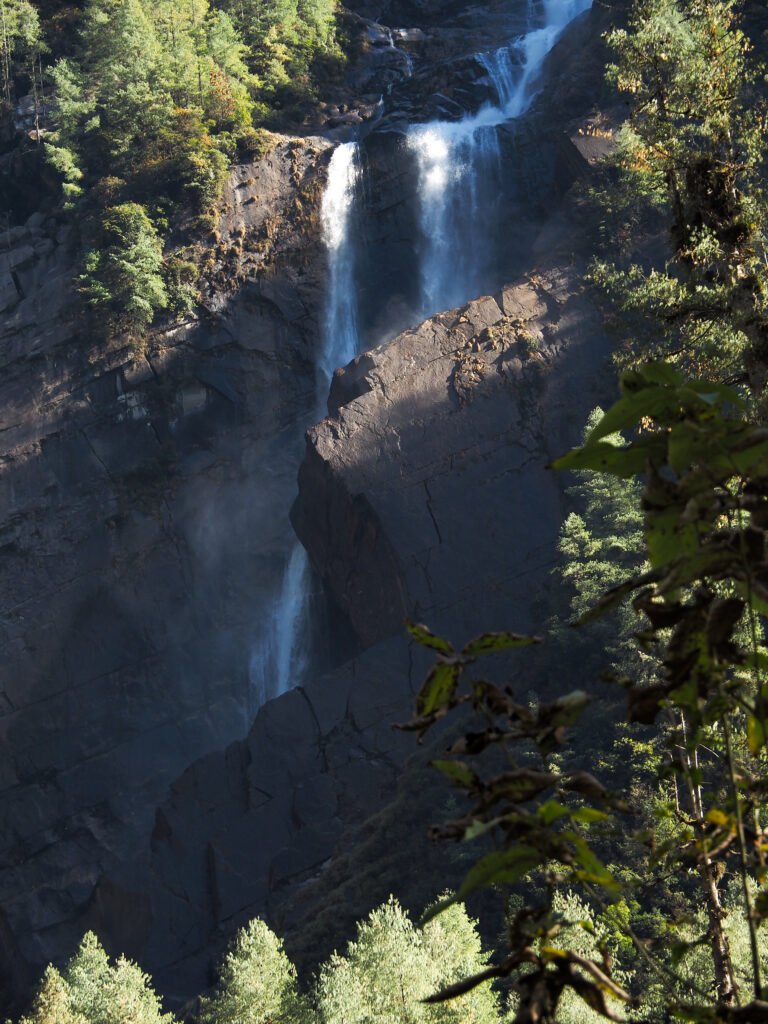
Sitting at 1800 masl in the upper part of the Dibang valley, surrounded by tall green mountains, vast grasslands and breathtaking waterfalls, Anini is a remote little town that has never seen a foreign tourist before. It is also the starting point of two valleys that end in Tibetan territory a few kilometres further on. On the west side, the valley of Emuli with its endless lush green grasslands; on the right side, Acheso, where driving along the single-lane road that climbs up the valley feels like taking part in a waterfall safari.
The family hosting us knows some English and has deep and precious knowledge of the local culture. Every night we sit by the fire with them, eating deliciously home cooked food and asking every question crossing our minds.
In Anini you won’t find any monastery, temple or church. The only worshipped entity here is nature, Nani Itaya, Mother Nature. People pray to the sun, the moon, the river and the mountains. They consider tigers and the other animals roaming the forests around the village as their brothers and sisters. There are no priests nor monks, but shamans, people who look ordinary but have spiritual powers, a direct connection with Nani Itaya. They are not appointed by anyone or anything, a shaman is born this way and their quality will just show and grow in time, allowing them to earn their precious role in the community with time and spritual practice. Shamans perform rituals and prayers for the community in times of need. When a villager dies, they chant for five days continuously, day and night, at the house of the dead’s family. The local Idu Mishmi tribe buries the body of the deceased in a hole in the ground as big as a room. It is in fact a room, with a real double size bed, a drawer, food supplies and clothing, partly provided by the family and partly offered by the community. The shaman is not present at the funeral, he will later on communicate with the dead person and guide their body into heaven. Contrary to hell, heaven is believed to be a confined, physical place a few kilometres north of Anini, mainly consisting of grassland. It is called Maga Mra (Soul Place) and no one can physically enter it.
Also in Anini every man goes around carrying a dao over the shoulder. They use it in the fields, in the forest and in their daily life. At home they keep the ancient dao, beautifully decorated and much bigger than the one for every day use. It is given by the father to the daughter as a wedding gift and in this way it is passed on from generation to generation.
Another heirloom kept for decades in the houses of the Mishmi tribe is a rifle. The owner of the homestay tells us that about 85% of the village’s inhabitants owns a gun. They use it for their hunting expeditions in the jungle, which can last even for several weeks uninterrupted. They hunt various animals for their meat, if they mistakenly hurt a tiger, which is considered a brother to the Mishmi tribe, they must publicly declare it to the village and participate in rituals for the action to be forgiven. The only other purpose of hunting, other than meat supplies, is musk deer hunting, whose body parts can be sold to the black market at high value, especially for the cosmetic industry.
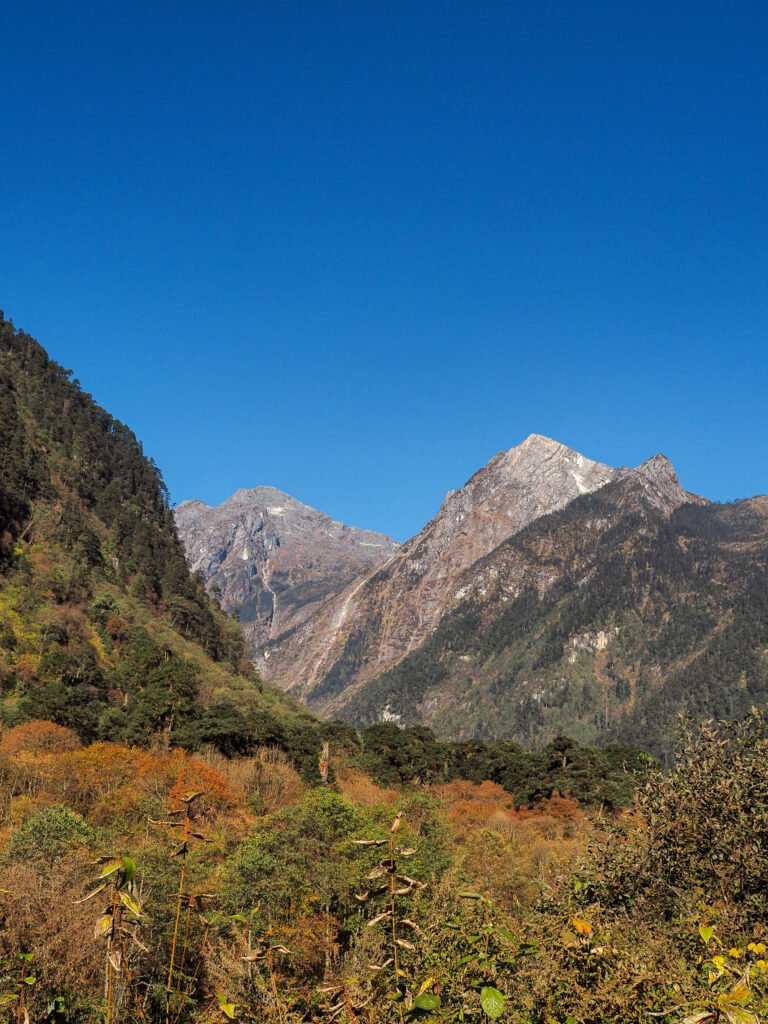
Anini was the last stop of our discovery of Arunachal Pradesh, a discovery full of adventure and uncomfortability, rich in learning new ways of living, in spirituality and in precious encounters. It truly felt like an honour to be able to get to know this remote region through its wild nature, its tribal culture and ancient traditions, and to be welcomed so warmly by its beautiful people.